
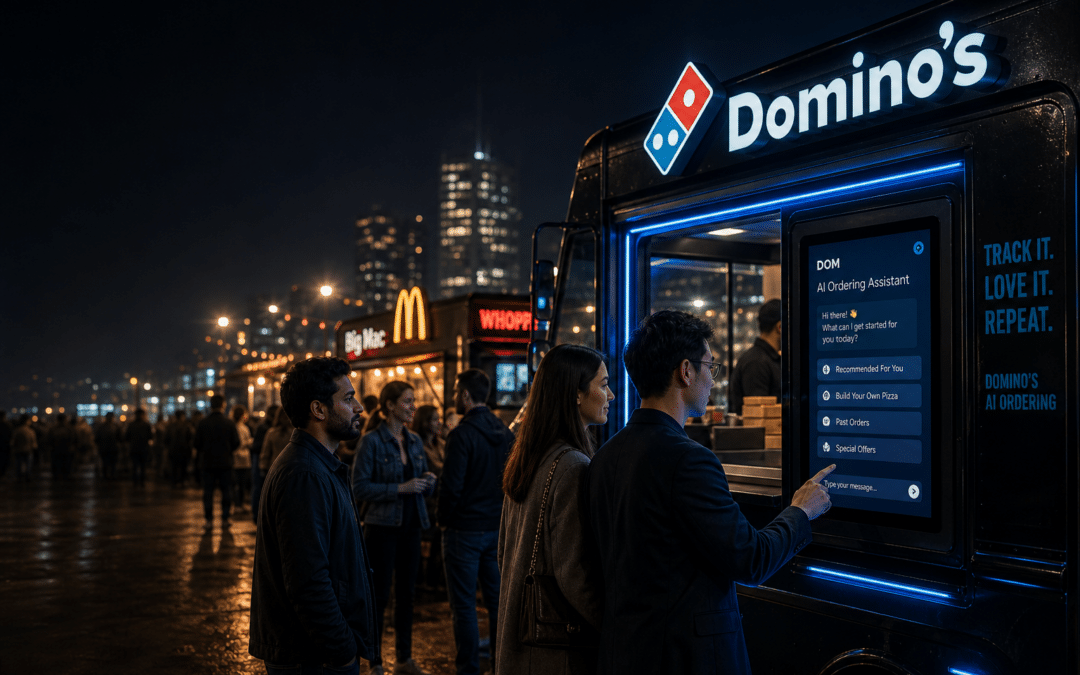
Domino’s marketing strategy isn’t just clever advertising or a catchy slogan—it’s a full-scale rethinking of how a fast food brand can compete in the U.S. By putting operational flaws front and center, inventing new ways to order, and treating transparency as a brand asset, Domino’s has outmaneuvered bigger burger rivals. The upshot for e-commerce brands: differentiation comes from making your process visible, removing every ounce of friction, and evolving loyalty into something interactive and dynamic. This is the Domino’s marketing strategy playbook that actually moves the needle, not just for pizza chains—but for any digital business aiming to win trust and repeat business.
Key Takeaways: Domino’s Marketing Strategy for E-Commerce
- Domino’s success comes from turning its weaknesses into marketing assets, making operational transparency a competitive advantage. This approach is supported by research from Harvard Business Review showing that transparency builds customer trust and drives engagement.
- Features like live order tracking and easy reordering aren’t just bells and whistles—they directly increase customer engagement and trust, aligning with findings from McKinsey & Company that real-time visibility enhances satisfaction in digital retail.
- True customer loyalty is built as an adaptive system, rewarding authentic interaction and feedback rather than just spend. Domino’s model reflects a shift toward loyalty programs that encourage ongoing participation, as discussed in Forbes’ analysis of top loyalty programs.
- Treating customer friction as an opportunity (not a nuisance) can unlock new growth levers for e-commerce brands. Addressing pain points in the open, rather than hiding them, reinforces trust and long-term loyalty.
- AI and automation deliver best results when tailored to real customer problems—never as a box-ticking exercise. According to Gartner, AI succeeds when implemented to solve specific, persistent customer needs.
Why Domino’s Marketing Strategy Disrupts: A Thesis for E-Commerce
Domino’s marketing strategy didn’t simply compete with the Big Mac or Whopper—it made the very act of ordering, tracking, and receiving a pizza into the main event. The brand’s rapid ascent is grounded in one non-obvious truth: operational honesty and visible improvement build real trust, and trust is what converts skeptics into loyalists. For e-commerce leaders, the message is blunt: stop hiding your cracks. Instead, address them in public, remove friction at every turn, and make each customer interaction feel like you’re one step ahead of their needs.
Most brands chase perfection and hide their mess. Domino’s flipped the script by airing its harshest reviews, rebuilding its entire pizza recipe, and letting the world watch. In an era when American consumers are jaded by bland brand promises, this kind of vulnerability stands out. The upshot: e-commerce brands that open up about their process—and fix the pain points customers actually feel—can outflank much bigger competitors who stick to glossy ad campaigns. This is a core part of Domino’s marketing strategy that resonates nationwide, especially in highly competitive U.S. regions where trust is hard-won.
How Domino’s Turned Weakness into Weapon: The “Pizza Turnaround” Case
When Domino’s famously admitted its pizza wasn’t good enough, most in the industry thought it was self-sabotage. Instead, Domino’s made the process of fixing its biggest flaw into the core of its marketing, running national campaigns that showcased real criticism and the step-by-step recipe overhaul. This wasn’t just showmanship—it was proof that the company listened, learned, and improved. This approach echoes findings in Inc., which highlights that brands owning their flaws can build stronger connections with customers.
Picture an e-commerce brand putting bad reviews about its slow shipping front and center, then launching a campaign that publicly documents its new warehouse partnerships, upgraded tracking systems, and faster delivery times. This is operational transparency in action. When you invite customers into your problem-solving process, you transform complaints into a narrative of progress. Domino’s didn’t just recover from negative press—it built a permanent feedback loop that kept customers emotionally invested.
According to Harvard Business Review, transparency can increase consumer trust and differentiate brands in crowded markets. Domino’s marketing strategy demonstrates this at scale across the U.S.
What E-Commerce Brands Usually Miss About Fast Food Marketing
Most e-commerce marketers look at fast food giants and copy the obvious: slogans, influencers, or splashy limited-time deals. But Domino’s advantage isn’t in its advertising gimmicks—it’s in logistics, technology, and the relentless focus on a better customer experience. Burger competitors typically treat these as invisible back-end functions, but Domino’s made them central to its story and marketing strategy.
Take the “Pizza Tracker.” Domino’s didn’t just add online ordering—it gamified the wait, letting customers watch their order in real time. This tactic turns a moment of customer anxiety (“Where’s my food?”) into engagement. Few non-pizza brands in the U.S. have followed suit. E-commerce operators should ask: where do my customers get frustrated, and how can I make those moments visible and fixable, not hidden away? This approach delivers a bigger competitive edge than any new Facebook ad campaign.
For a closer look at how operational upgrades drive real growth, see How U.S. Companies Use E-Commerce Services to Accelerate Growth.
Domino’s Marketing Strategy vs. Traditional Fast Food: A Real Comparison
| Approach | Domino’s Model | Traditional Fast Food (Big Mac/Whopper) | E-Commerce Application |
|---|---|---|---|
| Transparency | Admits flaws, shows improvement process | Focuses on image, hides problems | Feature operational pain points in campaigns, document real fixes |
| Customer Experience Tech | Order tracking, easy reordering, SMS/voice ordering | Mobile apps, but little visibility into process | Offer live order tracking, real-time chat, frictionless checkout |
| Loyalty | Gamified, built around engagement | Points/rewards, rarely evolving | Design loyalty around participation, not just purchases |
| Pain Point Focus | Turns complaints into engagement | Minimizes or ignores negative feedback | Showcase customer feedback in public, highlight changes made |
Most e-commerce teams pour budget into paid ads and creative, but underinvest in the operational upgrades that actually reduce customer friction. Even a modest shift in budget—such as reallocating from a third round of retargeting ads to a better checkout experience or a smarter AI chat—can pay off in conversion and retention. Tools like Shopify Flow for automation, or Gorgias for live chat, are practical starting points to operationalize these lessons.
External research from McKinsey & Company reinforces that brands investing in operational improvements—rather than just advertising—tend to see stronger, more sustainable customer loyalty.
Case Study: Domino’s “AnyWare” and the Power of Ubiquitous Ordering
Domino’s “AnyWare” didn’t just mean more ordering channels—it meant letting customers buy pizza however and wherever felt most natural: via text, tweet, smart TV, or voice assistant. The goal wasn’t to chase every new platform; it was to make ordering so frictionless it felt like second nature.
Contrast that with most e-commerce “omnichannel” strategies, which often bolt on new channels but deliver a clunky, inconsistent experience. Domino’s showed that the key is designing each channel’s flow to feel native—ordering by SMS shouldn’t just mimic the website checkout, but should feel like texting a friend. E-commerce brands can learn from this by mapping every customer journey, identifying micro-barriers, and using tools like Zapier, Attentive, or Postscript to create seamless, integrated flows across SMS, chat, and web.
For more on tailoring AI chat and lead capture for different verticals, see Is AI Live Chat & Lead Capture Worth It for Fitness Studios? and AI Live Chat & Lead Capture: 2026 Guide for Orange County HVAC.
According to McKinsey & Company, seamless omnichannel experiences are increasingly expected by U.S. consumers, and brands that deliver on this front stand out in competitive markets coast to coast.
From Static Loyalty to Living Systems: Domino’s “Piece of the Pie” and Beyond
Most fast food loyalty programs are static, points-based, and unresponsive to real customer behavior. Domino’s “Piece of the Pie Rewards” broke that mold by rewarding not just purchases, but engagement with digital platforms, social sharing, and campaign participation.
E-commerce brands should treat loyalty as a living, evolving system. For example, a cosmetics retailer could reward customers for uploading before-and-after photos, writing reviews, or taking part in live tutorials—not just for spending dollars. Integrations with tools like Smile.io or LoyaltyLion can help brands track, reward, and adapt incentives as customer needs change. The deeper insight: loyalty grows when customers feel your brand is learning from them—not just tallying their transactions.
For a broader look at innovative loyalty structures, Forbes details how top loyalty programs increasingly emphasize engagement and personalization over static point accumulation.
Domino’s Marketing Strategy Applied: The F.I.R.S.T. Framework
To operationalize Domino’s marketing strategy in e-commerce, use the F.I.R.S.T. Framework—a tactical blueprint to embed these lessons into your daily operations, tech stack, and customer messaging.
- Focus Relentlessly on Friction
- Integrate Tech that Solves Real Problems
- Reward Genuine Engagement, Not Just Spend
- Showcase Operational Transparency
- Test and Evolve in Public
Here’s how to put each step into action, with concrete examples and case studies for each:
- Focus Relentlessly on Friction: Map the end-to-end customer journey—from first ad click to post-purchase support. For instance, an apparel e-commerce store might use Hotjar session recordings and customer interviews to discover that their returns process is confusing. Rather than just tracking metrics, they observe real behavior and feedback. By dedicating a small team to streamline returns and then communicating the change, friction drops and customer satisfaction rises.
- Integrate Tech that Solves Real Problems: Domino’s didn’t add ordering channels for the sake of it; each was aimed at removing a known barrier. An example: a home goods retailer using Gorgias for AI live chat to provide real-time product availability and shipping updates, which immediately answers common customer questions and reduces abandonment. Avoid stacking tools for show—deploy what measurably improves the experience, and track support request trends to ensure the tech is solving the right issues.
- Reward Genuine Engagement, Not Just Spend: Move beyond dollar-based points. A beauty brand might incentivize customers to post tutorials on Instagram or review products, using Typeform to survey what types of rewards actually drive participation. Continuous feedback and evolving incentives keep the loyalty program relevant and engaging, not just another discount cycle.
- Showcase Operational Transparency: When you overhaul a process (shipping times, returns, product quality), make it public. For example, a supplements company struggling with packaging complaints could run an email and social campaign outlining new eco-friendly packaging, sharing behind-the-scenes photos and inviting customers to share feedback on the new design.
- Test and Evolve in Public: Don’t hide experimentation behind closed doors. A fitness apparel store might launch a new feature—like a virtual try-on tool—and publicly ask for feedback, iterating based on real user input. Domino’s “Points for Pies” campaign—where customers could upload any pizza photo, not just Domino’s—shows the impact of open innovation. Public iteration keeps your brand fresh and customer-centric.
For more practical tactics and tools, see 7 AI Live Chat Mistakes Costing Clinics Leads for concrete ways to avoid common automation missteps, and AI Live Chat & Lead Capture vs DIY: What Gets Results for side-by-side use cases.
What Role Should AI and Automation Play in Domino’s Marketing Strategy?
AI and automation should be focused on removing real customer pain points—not just ticking boxes for digital transformation. Too many brands launch AI live chat that’s just a glorified FAQ, or automate lead capture in ways that frustrate users. Domino’s digital tools—like real-time order tracking—don’t just inform; they actively reassure and delight the customer.
For e-commerce, deploy AI live chat where it solves real problems: live order status, context-aware product recommendations, and fast, personalized support. Use automation to shrink response times and handle routine requests, but keep a human backup for complex or emotional issues. For practical advice on deploying these tools, see 7 AI Live Chat Mistakes Costing Clinics Leads and AI Live Chat & Lead Capture vs DIY: What Gets Results.
When choosing platforms, prioritize integrations with your e-commerce backend (Shopify, Magento), CRM (HubSpot, Salesforce), and marketing stack—otherwise, you’ll end up with disconnected silos that hurt more than help. According to Gartner, organizations see the most value from AI and automation when these tools are directly tied to real business challenges and customer needs.
For deeper insight into analytics and performance, see AI Data Analytics.
Trade-Offs and Caution: What Domino’s Approach Can’t Solve
No strategy is a cure-all. Domino’s focus on operational tech has sometimes resulted in less menu innovation or a weaker in-store experience. For e-commerce brands, the risk is over-investing in digital convenience and under-investing in product development, authentic brand storytelling, or community building.
Radical transparency isn’t always a fit. If your supply chain or service standards aren’t ready for prime time, opening the curtain can backfire. The safer move: test transparency with a limited audience or one campaign before making it a pillar of your brand. As Harvard Business Review notes, transparency works best when operations can back up the story.
Lastly, don’t let automation erase your brand’s personality. Domino’s balances tech with a self-aware, playful tone. If you automate every touchpoint and strip out human interaction, your brand risks becoming invisible and forgettable. For strategies on blending automation with brand voice, see AI Content Creation and AI Social Media Management.
Applying Domino’s Lessons: A Step-by-Step Playbook for E-Commerce Marketers
- Audit Your Friction Points: Gather feedback via NPS surveys, session recordings, and live chat logs to pinpoint exactly where customers get stuck. Tools like Hotjar and Intercom can surface hidden issues. For example, a home decor retailer might discover checkout confusion leading to cart abandonment and use that insight to simplify the process.
- Prioritize Operational Improvements: Shift part of your marketing budget from ads to tech/process upgrades that have a visible impact—like faster checkout, improved order tracking, or more responsive chat. Imagine reallocating ad spend to enable real-time SMS order updates, which can noticeably reduce support requests and boost satisfaction.
- Build Transparency into Campaigns: Pick one operational pain point, fix it, and document the process in public. Use campaign emails or a dedicated landing page to show the before-and-after and invite further feedback. For example, a pet supply brand might highlight how it improved shipping speed, sharing time-lapse videos of warehouse upgrades and customer testimonials about the new experience.
- Upgrade Loyalty from Points to Participation: Redesign rewards to recognize actions like referrals, reviews, and engagement—using platforms like LoyaltyLion or Smile.io. For instance, a niche grocery e-commerce site could run a contest for recipe submissions, rewarding participants with exclusive perks.
- Deploy AI and Automation with a Human Face: Test your live chat and lead capture flows as a customer. If they feel robotic or frustrating, iterate until the interaction feels genuinely helpful and human. Make sure customers can easily reach a real person when needed, ensuring empathy isn’t lost.
- Monitor, Iterate, Repeat: Use analytics tools (e.g., Google Analytics, Mixpanel, or AI Data Analytics) to track what’s actually driving results, and don’t be afraid to pivot if a tactic underperforms.
National U.S. Context: Why Domino’s Marketing Strategy Resonates Nationwide
Domino’s breakthrough isn’t just about pizza—it’s about tuning into deep U.S. consumer attitudes: skepticism of big brands, hunger for convenience, and a desire to see how the sausage (or pizza) gets made. Whether you’re in home goods, apparel, or SaaS, these lessons carry across industries and regions.
American customers reward brands that make life easier and treat them as active collaborators, not just passive purchasers. E-commerce brands that fixate on operational excellence, transparent problem-solving, and earned trust will pull ahead—while those who copy surface-level tactics will get lost in the noise. Domino’s marketing strategy proves especially effective in highly competitive U.S. markets, from major metros to local hubs like Orange County, CA.
For marketers in hyper-competitive areas like Orange County, Domino’s approach proves that process—not just product or promotion—can be your ultimate differentiator. In crowded markets, customers talk about brands that solve real problems and show their work, which is why the Domino’s marketing strategy is so frequently cited as a blueprint for e-commerce innovation in the U.S.
For more insights on how U.S. companies adapt e-commerce strategies to local markets, see How U.S. Companies Use E-Commerce Services to Accelerate Growth.
Final Word: Domino’s Marketing Strategy Shows the Real Competitive Edge Is Process
Domino’s didn’t win by making the best pizza—it won by making it radically easier (and more transparent) to buy, track, and receive a pizza, and by letting customers see the brand’s journey. E-commerce businesses that take these lessons seriously—investing in operational innovation and visible improvement—don’t just keep up with trends; they set them.
If you want Domino’s-style results, start by surfacing your own friction points, fixing them out in the open, and inviting customers along for the ride. The brands that build this open, iterative culture—across every touchpoint from website to AI chat to loyalty—are the ones that earn lasting trust and advocacy. For those ready to put these ideas into practice, services such as E-Commerce Services, Website Development & Management, and AI Live Chat & Lead Intake Assistant can help reinforce the operational backbone, but the real win is always in solving customers’ core problems, not just ticking tech boxes. (One quick note: Lion Click Media is based in Orange County, but these lessons apply to brands everywhere.)
Frequently Asked Questions
How can AI live chat improve e-commerce lead capture?
AI live chat improves lead capture by engaging visitors instantly, answering questions in real time, and qualifying leads automatically without human delay.
What makes Domino’s marketing strategy effective against Big Mac and Whopper?
Domino’s focuses on digital-first ordering, fast customer engagement, and data-driven personalization, enabling quicker adaptation than traditional mass-media strategies.
Is AI live chat suitable for small e-commerce businesses?
AI live chat can be valuable for small businesses with growing traffic, but it may require ongoing management and investment that might be overkill for very low-volume stores.
How does data analytics enhance AI chat performance?
Data analytics allows continual refinement of AI chat content and workflows based on user behavior and conversion outcomes, improving engagement quality over time.
What other AI tools complement an AI live chat assistant for e-commerce?
Complementary tools include AI advertising campaigns, AI content creation, and AI social media management to create an integrated, data-driven marketing system.
Can AI chat assistants handle complex customer questions?
Advanced AI chat assistants can manage many complex queries but usually escalate highly specialized or sensitive issues to human agents for best results.
How do national brands maintain consistency using AI across regions?
They implement centralized AI systems with localized data inputs, allowing messaging and offers to adapt regionally while maintaining brand coherence.
Get Your Free AI Marketing Audit
See exactly where you are leaving leads on the table and how Lion Click Media can help you rank higher, capture more customers, and Make Your Brand ROAR. No cost, no obligation.
Claim My Free Audit →Or chat with our 24/7 AI assistant (bottom-right) for instant answers.