
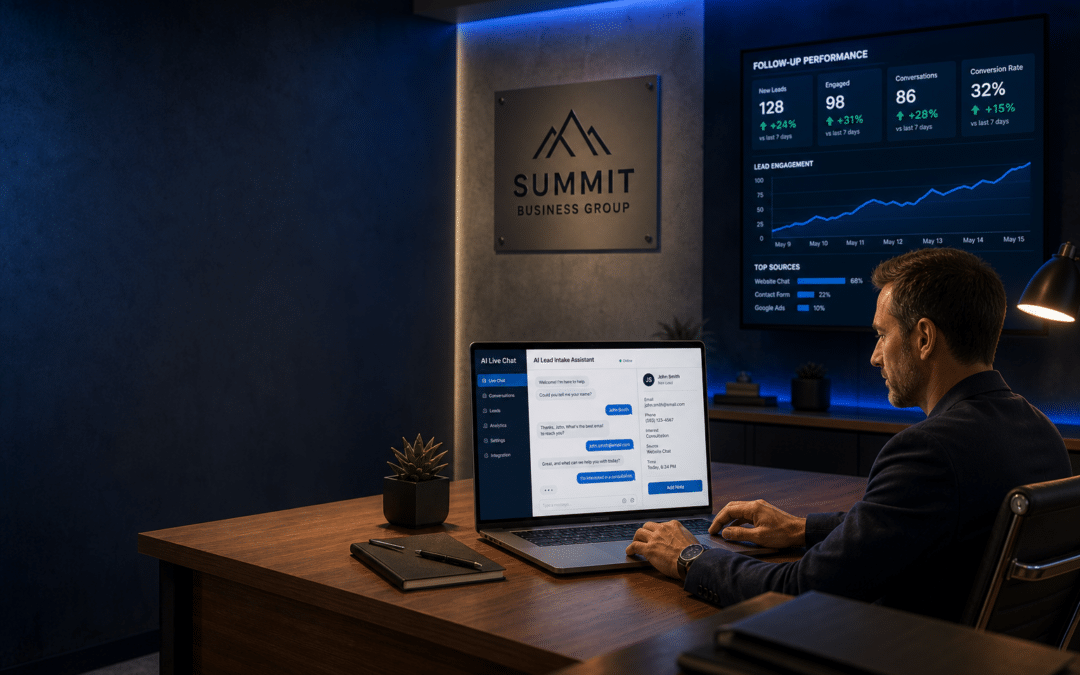
Most businesses don’t actually need more traffic—they need better follow-up. The real bottleneck for growth is almost always missed, slow, or inconsistent engagement with the leads and customers they already attract. Fixing follow-up systems—through smarter automation, faster response, and real lead nurturing—leads to higher conversion rates without having to pour more money into ads. The evidence is overwhelming: poor or delayed follow-up is the silent killer of sales opportunity, and addressing it delivers faster ROI than nearly any new traffic campaign.
Key Takeaways
- Speed and consistency in lead follow-up matter more than attracting incremental new traffic for most businesses.
- Automated tools like AI live chat assistants and conversational forms dramatically outperform static forms in lead capture and qualification.
- Many teams underestimate the scale and cost of dropped leads due to poor follow-up—addressing this is often the fastest way to improve results.
- A robust follow-up framework systemizes every step, from instant response through long-term nurturing and evaluation.
- The best follow-up blends automation for efficiency with authentic human engagement at key points—automation alone isn’t enough.
Why “More Traffic” Rarely Solves the Real Growth Problem
Business leaders often obsess over driving more web traffic or buying more leads, believing that’s the key to growth. But most overlook where the real waste happens: the majority of leads are lost not because of too little demand, but due to broken or nonexistent follow-up. According to Zapier Survey 2026, 92% of sales teams lose qualified leads every month due to delayed, inconsistent, or forgotten follow-ups. This silent churn dwarfs the marginal gains from incremental traffic.
Think of it this way: adding more leads to a leaky follow-up system is like pouring water into a bucket full of holes. Until those holes are patched, more traffic just increases the waste. For example, a local service company might generate dozens of web leads per week, but if only a handful ever get a timely, meaningful response, the rest are simply lost—no ad campaign will replace that missed opportunity.
The core issue isn’t visibility, it’s operations. Most companies don’t have a demand problem—they have a follow-up problem. Before spending more on reach, diagnose the leaks in your response pipeline. The fastest, most reliable ROI usually comes from better follow-up, not more eyeballs.
How Slow or Inconsistent Follow-Up Bleeds Revenue
Lead response timing is ruthlessly unforgiving. According to Boltcall 2026 Research Data, businesses responding within five minutes are nine times more likely to convert leads than those responding after 30 minutes. Yet, LimeCall’s B2B Lead Response Benchmark Report 2026 found the average company takes 42 hours to reply, with 23% of companies never responding at all.
The hidden cost isn’t just in lost sales—it’s in wasted ad spend, burned-out sales teams, and reputation damage. Today’s prospects expect a near-instant response; if they don’t get it from you, they move on. Delayed or forgotten follow-ups erode trust, making even warm leads go cold. In practical terms, a business might be burning through its marketing budget only to see the bulk of leads die in the inbox.
Here’s what most businesses miss: it’s not enough to respond eventually—the speed and quality of the initial follow-up sets the tone for the whole customer journey. According to the WifiTalents Report 2026, a 24-hour delay in follow-up reduces lead conversion rates by 70%. Businesses that systemize for immediate, consistent response capture far more value from the same traffic than those who rely on memory or manual reminders.
What Most Businesses Get Wrong About Lead Follow-Up Strategies
Too many businesses treat follow-up as an afterthought—handled ad hoc by whoever is available, or worse, by automated emails no one ever customizes. The most common mistake is assuming a single follow-up attempt is “enough.” In reality, effective follow-up requires a multi-touch, multi-channel approach that adapts to each lead’s behavior and intent.
Another widespread error: confusing speed with effectiveness. Yes, fast response is critical, but robotic or generic replies can do more harm than good. Prospects quickly spot canned answers. What works is blending automation for speed with human personalization for trust-building. For example, an AI live chat assistant can instantly qualify and route leads, but handing off high-interest prospects to a real salesperson for nuanced conversation is what actually closes deals.
The real win isn’t just responding quickly—it’s continuing to follow up thoughtfully, even after the first response. Most sales happen after multiple touches, but many businesses give up too soon. A practical workflow: respond instantly with automated chat, follow up with a personalized email or call within an hour, and then nurture with valuable content over days or weeks as needed.
- Don’t assume the first follow-up closes the deal—plan for several touchpoints over time.
- Mix channels: combine text, email, phone, and live chat based on lead preferences.
- Use automation to trigger reminders, but add human touches where it counts.
- Track each lead’s status and next action—never let leads “fall through the cracks.”
Framework Spotlight: The SURE System for Better Follow-Up
To operationalize better follow-up, consider the SURE System—a practical, four-part methodology any business can apply. SURE stands for Speed, Understanding, Re-engagement, and Evaluation. Here’s how to put it to work:
- Speed: Set up systems to respond within minutes—not hours. Use tools like Intercom, HubSpot, or an AI live chat assistant to instantly acknowledge leads, answer basic questions, and schedule calls or demos automatically. As Boltcall found, those first five minutes are gold for conversion.
- Understanding: Qualify each lead by asking the right questions up front. AI chatbots and conversational forms (such as those built with Dashform or Typeform) can pre-qualify by capturing budget, timeline, and intent. Route leads based on their responses to focus human attention on true prospects, not tire-kickers.
- Re-engagement: Build an automated follow-up sequence across channels. If a lead goes cold after the first touch, set reminders to check in at set intervals (for example, 24 hours, 3 days, 1 week), using a mix of email, SMS, and even retargeting ads. Share useful content or answer new questions to keep the conversation alive. For example, a clinic following the SURE system might use an AI live chat to book initial consults, then send personalized post-visit follow-ups—avoiding some of the classic mistakes clinics make with automation.
- Evaluation: Regularly review your lead pipeline. Track metrics like response times, open rates, and conversion rates by source using a CRM like Salesforce or Pipedrive. Use AI-powered dashboards to spot bottlenecks and adjust scripts and sequences as insights emerge, rather than relying on gut feel.
The SURE System’s power is in its repeatability. When every team member follows a clear, tech-enabled workflow, businesses see fewer dropped leads and more consistent revenue—without needing to crank up ad spend.
AI Live Chat Assistants vs Static Forms: What Converts?
Not all lead capture is created equal. There’s a night-and-day difference between a static contact form and a smart, conversational assistant. According to Dashform 2026 Conversion Data, static forms typically convert at just 2-3%, while AI chatbots convert at 10-15%, and conversational AI forms can convert 15-25% of visitors.
Static forms are a bottleneck—they create friction, feel impersonal, and often go unanswered for hours or even days. In contrast, an AI live chat assistant can greet visitors in real time, answer questions, qualify intent, and escalate hot leads—all while collecting contact info and permission to follow up. According to the AMW Live Chat Statistics 2026, live chat has a customer satisfaction rate of 73%, the highest among support channels.
For service businesses, clinics, or repair shops, the impact on customer engagement and bookings can be dramatic. Upgrading your lead capture isn’t about tech for tech’s sake—it’s about removing friction and starting the follow-up process immediately, with context. Businesses that combine conversational AI with human backup get both scale and authenticity.
| Lead Capture Method | Conversion Rate (Typical) | Response Speed | Personalization | Best Use Case |
|---|---|---|---|---|
| Static Contact Form | 2-3% (Dashform) | Hours to days | Low | Basic info capture, low-touch leads |
| AI Live Chat Assistant | 10-15% | Instant (24/7) | Moderate (scripted) | Service businesses, high-volume sites |
| Conversational AI Form | 15-25% | Instant | High (dynamic Q&A) | Consultative sales, qualification |
| Manual Live Chat (Human) | Varies (often lower after hours) | Immediate (if staffed) | Highest | Complex sales, high-ticket offers |
The right mix depends on your business model, but for most companies, upgrading from static forms to smart chat is the lowest-hanging fruit.
Real-World Scenario: The Missed-Lead Snowball for Service Businesses
Consider a midsize HVAC company with a steady stream of web visitors and a basic contact form. On paper, traffic looks healthy. In reality, most form fills go unanswered for hours—especially after 5pm. Prospects expecting a fast reply are left hanging and end up calling a competitor. The sales team, busy with quotes and installs, often forgets to follow up until the trail has gone cold.
Now, picture the same company implementing an AI live chat assistant. Visitors are greeted instantly, FAQs are answered, and service requests are collected—even at midnight. Leads are qualified and booked for next-day callbacks, while the system triggers reminders for the sales team. Over several weeks, the company might see a visible uptick in booked jobs and fewer “ghost leads.” This isn’t hypothetical—many Orange County service businesses have seen these dynamics firsthand, as discussed in the 2026 Guide for Orange County HVAC.
The lesson: In most industries, the real cost isn’t in attracting the lead, but in failing to follow up quickly and persistently. A modest investment in better follow-up pays for itself far faster than another round of ads.
Lead Qualification: Why Not All Inquiries Deserve the Same Attention
Many companies burn out their sales teams by treating every lead as equally valuable. The smarter approach is to qualify leads early—ideally at the point of first contact. This is where AI live chat assistants and conversational forms excel, using branching questions to determine budget, urgency, and fit.
For example, a fitness studio might use AI chat to separate casual info-seekers from ready-to-join prospects, focusing human attention on the latter. This not only increases close rates but also reduces wasted effort. Similar patterns hold for clinics, trades, and e-commerce sites—AI-driven qualification improves both customer experience and team productivity.
One crucial nuance: Over-automation can backfire if the qualification process feels too rigid or impersonal. The best systems hand off to a human at the right moment—when the lead signals real intent or asks nuanced questions. Effective follow-up uses automation to filter, not to replace, meaningful engagement.
Marketing Automation: Building a Better Follow-Up Engine
Automation is the backbone of scalable follow-up, but most businesses set it up wrong. The mistake? Relying on generic drip emails or basic CRM reminders. True marketing automation means building sequences that adapt based on lead behavior, engagement, and channel preference.
A workflow that works: a new lead triggers an instant AI chat or email reply, followed by a personalized message from a real team member within the hour. If there’s no response, the system automatically schedules a follow-up text the next day, then a helpful content email a few days later. Throughout, engagement is tracked—if the lead clicks, replies, or schedules, the sequence adapts or escalates.
What most businesses miss is the need for dynamic, not static, follow-up. If a lead says “not now,” shift them to long-term nurturing. If they ask about pricing, the next follow-up should address value and differentiation—never just a generic message. Integrating tools like AI data analytics and AI-powered social media engagement can inform smarter segmentation and timing.
Checklist: Building a Resilient Lead Nurturing System
- Audit your current lead response times—use mystery shopping or lead tracking tools to see how long it really takes.
- Implement instant response mechanisms (AI live chat, SMS autoresponders, or conversational forms).
- Map out a multi-touch follow-up sequence—at least four to six touches across channels over several weeks.
- Qualify leads early with branching questions—automate routing for high- vs. low-priority prospects.
- Assign clear ownership for each stage of follow-up; avoid “everyone’s job is no one’s job.”
- Review and update follow-up scripts regularly based on real outcomes and objections.
- Integrate your CRM, chat, and email systems so all lead activity is tracked in one place.
- Set up re-engagement campaigns for cold leads—such as monthly check-ins or relevant offers.
- Monitor conversion rates and response metrics—adjust tactics as needed.
Following this checklist closes the gap between capturing a lead and converting them into a customer. Most businesses are stunned at the improvement when these basics are done well.
Trade-Offs and Caveats: Where Automation Can Fall Short
Automation and AI have revolutionized follow-up, but they’re not a cure-all. One key trade-off: over-automation can alienate leads who crave a personal touch, especially in high-trust industries like healthcare or complex B2B sales. There’s also a risk of “automation fatigue”—prospects bombarded by generic sequences may tune out or mark messages as spam.
A real-world limitation: AI chat can struggle with nuanced or highly specific queries, leading to frustration if there’s no easy handoff to a human. That’s why the most effective systems blend automation with well-timed human intervention. For example, an auto repair shop might automate basic intake but always provide a real contact for unique repair questions—a strategy outlined in the AI Live Chat vs DIY comparison for auto repair.
The lesson: Use automation to handle repetitive, time-sensitive steps, but don’t abdicate relationship-building. Review your automated workflows regularly, and make sure there’s always a clear “human off-ramp” when needed. That’s how you balance efficiency with genuine customer engagement.
Next Steps: Upgrading Your Follow-Up Is Easier Than You Think
Most businesses are sitting on untapped revenue simply because their follow-up systems are outdated or inconsistent. The good news: upgrading doesn’t require a total overhaul. Start by auditing your current lead response, then layer in tools like an AI live chat & lead intake assistant or advanced marketing automation. Even modest improvements in response speed and consistency can produce visible results—often outpacing what you’d gain from expensive new traffic campaigns.
For those ready to get more advanced, integrating AI content creation for nurturing emails, or deploying AI-driven advertising campaigns to re-engage cold leads, can push results even further. If you’d rather not go it alone, Lion Click Media (based in Orange County but serving clients nationally) specializes in these kinds of follow-up and automation solutions—but the principles here apply no matter who you choose to work with.
Ultimately, the businesses that win aren’t the ones with the most traffic—they’re the ones who never let a warm lead slip away. Make better follow-up your growth lever, and you’ll see the real difference where it counts: in conversion, loyalty, and bottom-line results.
Frequently Asked Questions
Why is follow-up more important than traffic for most businesses?
Follow-up converts visitors into customers; without it, more traffic often results in wasted leads and higher costs without improving sales.
How fast should businesses respond to new leads?
Ideally, within minutes—instant or near-instant response captures interest at its peak and significantly increases conversion chances.
Can AI live chat replace human salespeople for follow-up?
AI chat handles initial engagement and qualification instantly, freeing human sales to focus on high-priority, complex leads rather than replacing them entirely.
What types of businesses benefit most from AI-powered follow-up systems?
Service-based businesses with high inquiry volumes, like med spas, home services, and legal firms, gain the most from AI chat and automated lead intake.
How do you know if you need more traffic or better follow-up?
Analyze your conversion funnel: if traffic is steady but sales lag, follow-up is the likely bottleneck; if awareness is low, focus on traffic first.
What tools integrate well for automated follow-up?
CRMs like HubSpot or Salesforce combined with AI live chat assistants and marketing automation platforms provide seamless follow-up workflows.
Is better follow-up costly to implement for small businesses?
Improved follow-up can be cost-effective, especially with AI tools that reduce manual work and improve conversion rates, often paying for themselves quickly.
Get Your Free AI Marketing Audit
See exactly where you are leaving leads on the table and how Lion Click Media can help you rank higher, capture more customers, and Make Your Brand ROAR. No cost, no obligation.
Claim My Free Audit →Or chat with our 24/7 AI assistant (bottom-right) for instant answers.