
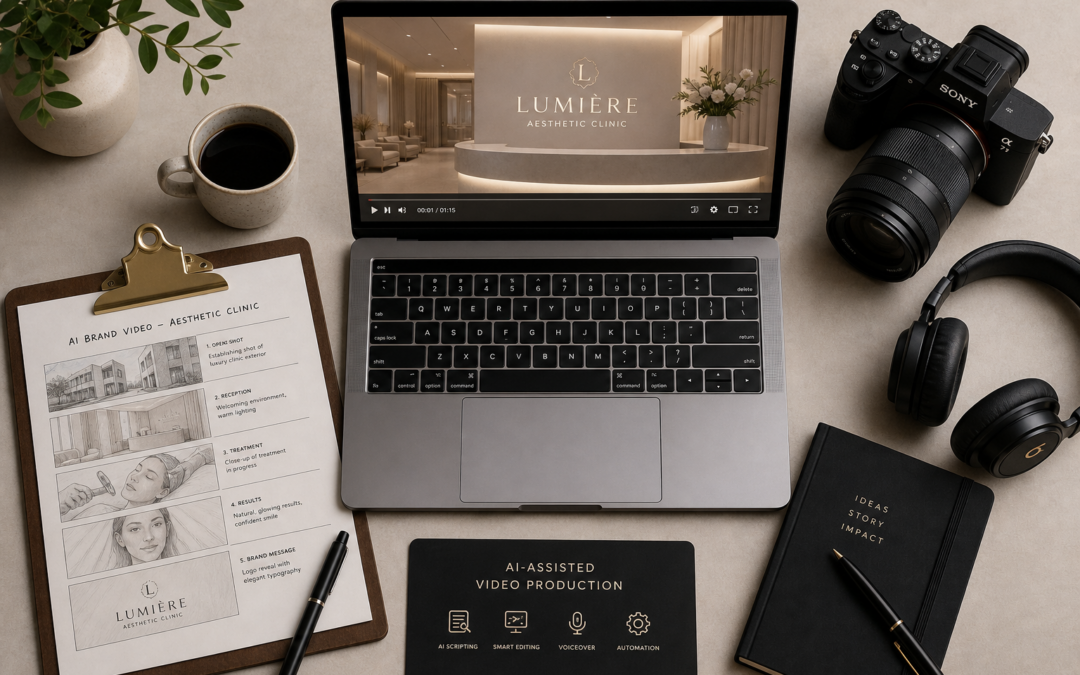
AI brand video production for cosmetic clinics is now a fundamental part of modern marketing—not just a trend, but a must-have for clinics aiming to build trust, control costs, and keep up with rising patient expectations. To get real results, clinics must go beyond basic automation and adopt a disciplined, systematized approach that blends clear brand standards, hands-on human review, and workflow updates built for the AI age. The right strategy turns AI video from an experiment into a reliable growth driver, while helping clinics avoid compliance missteps and generic content.
In short: Cosmetic clinics using AI video successfully focus on clear brand guidelines, combine human oversight with smart automation, and continuously refine their process based on data. This helps them create compliant, high-performing videos that stand out—without ballooning costs or sacrificing trust. Below, you’ll find a proven framework, practical tool tips, and real-world scenarios to guide your own AI video strategy.
Key Takeaways
- AI video production has shifted from an experiment to a necessity in cosmetic clinic marketing, as adoption and client expectations grow (Morphed).
- Success means more than pumping out content—it’s about disciplined storytelling, brand consistency, and thoughtful integration of AI with human judgment.
- AI can reduce production costs and speed up output, but only if clinics avoid workflow bloat, tool overload, and compliance risks.
- Choosing between DIY, hybrid, and agency-led AI video models requires a realistic look at team skills, risk appetite, and growth targets.
- Clinics that use a clear, stepwise framework for asset management, automation, review, and ongoing improvement achieve the most sustainable gains.
What’s Driving the Surge in AI Brand Video Production for Cosmetic Clinics?
AI is reshaping how aesthetic clinics approach video marketing. According to Morphed, professional AI adoption in video production teams reached 41% in 2026, more than doubling in just three years. This is about more than speed—it’s a response to intense competition and the challenge of reaching new patients efficiently.
For example, imagine a mid-size clinic in a busy metro area where the average cost to acquire a new patient (often called CAC, or customer acquisition cost) typically falls somewhere in the low-to-mid hundreds of dollars—a range that can quickly add up when content demand multiplies across Instagram, TikTok, and YouTube (FluxNote). Relying on manual video production alone becomes less practical as expectations for both quality and quantity rise.
Where many clinics stumble is treating AI as a shortcut—using it simply to churn out more videos. The smarter move is to automate repetitive tasks (like reformatting or basic edits), freeing up staff to focus on scripting, storytelling, and compliance. For instance, a clinic might use AI to quickly generate video drafts for routine procedure explainers, but reserve final scripting and compliance checks for experienced staff. Clinics that thrive see AI as a creative assistant, not a content robot, and use it to shift their team’s time toward what actually builds trust.
Why AI Video Creation Isn’t a Silver Bullet—And Where Most Clinics Get It Wrong
A common myth is that AI can fully replace human oversight in brand video production. Too often, clinics get seduced by the promise of instant, high-volume content, only to end up with generic videos that miss the mark on brand personality—or even worse, violate strict medical advertising rules.
Aesthetic clinic marketing depends on trust and subtlety. Even top AI tools can generate awkward before-and-after visuals, inconsistent color palettes, or scripts that miss the emotional cues patients respond to. For example, an AI-generated video might unintentionally use language implying guaranteed results, putting the clinic at risk with regulators.
Clinics getting this right invest time upfront: they create detailed brand guidelines, curate a library of approved images and scripts for AI prompts, and require human review on every final cut. For example, a practice might build a folder of compliant before-and-after photos and approved phrases, then use those as guardrails for AI script generation—ensuring each video stays true to the clinic’s standards. For more on avoiding brand-damaging mistakes, see 7 Logo Design Mistakes Costing Cosmetic Clinics Leads—many lessons there apply directly to video content.
How Does AI Brand Video Production Actually Cut Costs—and Where Are the Hidden Expenses?
AI promises faster, more affordable video production. According to Ravon Group, AI-optimized marketing has been shown to reduce the cost per new patient by 30 to 45%. However, these savings can evaporate if clinics aren’t careful about how they implement AI.
- Over-customization: Some clinics spend hours tweaking every AI output, which erases the efficiency gains AI is meant to deliver. For example, a team might repeatedly rewrite AI-generated scripts instead of refining their templates upfront.
- Tool overload: Signing up for multiple AI platforms—each with ongoing fees—can quietly increase monthly costs. One clinic might juggle subscriptions to four or five tools, only to use each sporadically.
- Compliance missteps: Skipping thorough compliance checks can lead to expensive re-edits, or regulatory troubles if a video goes live with unapproved claims.
Clinics that avoid these pitfalls usually standardize their workflow and batch content by campaign theme, limiting review cycles and resisting endless fine-tuning. For a breakdown of what real clinics pay—and which costs to watch for—see AI Brand Video Production Cost in 2026: Real Pricing.
The Four Pillars of Effective AI Brand Video Production: The C.A.S.E. Framework
A scattershot approach rarely delivers. The C.A.S.E. Framework gives clinics a practical, four-step process for getting the most from AI video production—each step with integrated tool suggestions and clinic-specific examples:
- Curate: Centralize assets—logo files, approved color palettes, before/after photo policies, sample scripts, and compliance checklists—in a cloud system like Google Drive, Dropbox, or an Adobe Creative Cloud Library. For instance, a clinic might create folders for each campaign (e.g., “Spring Filler Launch”) with subfolders for scripts, images, and disclosure templates. Tools like Canva Brand Kit also help maintain visual consistency by storing fonts, colors, and logos in one place.
- Automate: Use AI tools for repetitive tasks: Descript can handle automated editing and captioning; Synthesia generates AI avatars for educational videos; Pictory or Lumen5 automate batch-formatting for short social videos. For example, a clinic could use Pictory to turn a series of FAQ scripts into quick TikTok-ready clips, setting clear triggers for human review on videos that reference medical claims.
- Supervise: Appoint a reviewer with both branding and medical compliance expertise—often a practice manager or marketing lead. Develop a simple review checklist: Does the video reflect your brand tone? Are required disclosures included? Are images and scripts compliant with medical advertising rules? For example, a clinic might use a Google Form to log each review and approval, keeping an audit trail for regulatory peace of mind.
- Enhance: Feed video performance data back into your process. Use analytics tools like Google Video Analytics or TubeBuddy to track which videos drive the most engagement and bookings. A clinic might notice that patient testimonial clips outperform animated explainers, then prioritize that format in future campaigns. Integrating video analytics dashboards with your CRM lets you see which video topics or styles lead to actual appointment requests.
Many clinics under-resource the “Enhance” step, missing out on the compounding gains of continuous improvement. For example, a clinic that reviews its analytics monthly can spot trends—like which video formats work best on Instagram versus YouTube—and adjust scripts or visuals accordingly.
- Curate: Canva Brand Kit and Adobe Libraries standardize your clinic’s colors and logos across all AI video outputs.
- Automate: Descript, Synthesia, Pictory, Lumen5, and InVideo help clinics batch-produce compliant video assets quickly. Just ensure your team updates templates regularly to avoid generic or outdated messaging.
- Supervise: Standardized review checklists help non-experts avoid compliance slip-ups—one clinic set up a required sign-off for every video referencing injectables or new procedures.
- Enhance: Connecting analytics dashboards with your booking system reveals exactly which videos lead to patient inquiries or bookings, closing the loop between content and ROI.
Comparison Table: AI Video Production Options for Cosmetic Clinics
| Production Model | Pros | Cons | Best For |
|---|---|---|---|
| DIY AI Tools (In-House) | Low cost, quick turnaround, full content control | Steep learning curve, variable quality, higher risk of compliance errors | Clinics with tech-savvy marketing staff and tight budgets |
| Hybrid (In-House Creative, Outsourced Editing) | Balanced costs, blends clinic authenticity with specialist speed | Requires strong coordination, can introduce workflow delays | Clinics with strong brand assets but limited editing capacity |
| Agency-Led AI Production | High quality, strategic oversight, robust compliance support | Higher upfront cost, less day-to-day control | Growth-focused clinics prioritizing reputation and compliance |
| Fully Manual (Traditional Production) | Maximum creative control, fully bespoke output | Time-consuming, expensive, not scalable for ongoing campaigns | Flagship projects or large-scale national campaigns |
Choosing the right model is about more than cost. Clinics focused only on saving money often face workflow bottlenecks or diluted brand messaging. Clinics aiming for multi-location growth, or those wanting a premium reputation, usually get the best results from structured hybrid or agency-led models. Independent research from Marketing Dive shows that adoption of AI in video production is climbing across industries, making it important for clinics to identify the approach that fits their size, risk profile, and goals.
What Types of AI Brand Videos Actually Move the Needle for Cosmetic Clinics?
Not every AI video format delivers the same impact. Clinics making real progress match video types to specific stages of the patient journey, rather than defaulting to generic testimonials or explainer reels.
- Authentic Patient Stories: AI tools can edit user-generated content (UGC) for consistency and compliance. For example, a clinic may use AI to anonymize voices or blur faces, then add branded overlays and calls-to-action. The patient’s real experience remains at the center, but privacy and compliance are protected.
- Staff Expertise Features: AI can help script content, but real clinicians film the videos. AI automates subtitles and multi-language dubs, making content accessible to diverse audiences. For instance, a nurse injector could record a short video on post-procedure care, with AI providing accurate Spanish or Mandarin captions.
- Animated Explainers: Tools like Vyond or Animaker let clinics turn complex procedures into simple, branded animations. A clinic might create short, platform-optimized explainers for Instagram Stories or their website, making it easy for patients to understand treatment options.
- FAQ and Myth-Busting Clips: AI can surface trending patient questions from search data, then script and edit rapid-fire video responses that address concerns and position your clinic as an expert. For example, an AI tool might identify “Is Botox safe long-term?” as a hot topic, and generate a draft script for your medical director to review and record.
The key: Real impact comes from clarity, authenticity, and tailoring content to each channel—not just volume. For a deeper look at growing your clinic’s reach across multiple locations, see Boost Multi-Location Visibility with AI & Video.
How Can Cosmetic Clinics Safeguard Brand Integrity When Using AI?
Brand drift is a subtle but real risk in AI video production. If AI tools aren’t given strict rules, they can introduce off-brand colors, mismatched fonts, or scripts that stray from your approved messaging—especially when producing content at scale.
Consider a clinic rolling out a new filler campaign. AI generates 20 short videos, but without a locked-in style guide and compliance process, small inconsistencies creep in—like incorrect logo placement, unclear phrasing, or missing disclosures. Over time, these erode patient trust and dilute your clinic’s reputation.
The solution: 1) Build brand and compliance rules directly into your AI prompts and templates by referencing style guides, approved taglines, and clear “do/don’t” examples. 2) Use a multi-person review process to catch issues before anything is published. Clinics struggling with visual consistency may want to consult resources like Brand Identity & Logo Design Costs in 2026: Real Pricing to decide what’s worth investing in for long-term brand strength.
For more on keeping your visuals on track, including tips for schema markup and video SEO, see our article on Video SEO & Schema Markup Guide.
Which AI Tools Make Sense for Cosmetic Clinic Video—and What Are the Trade-Offs?
With so many AI video platforms out there, the best tool is one your team can use consistently and confidently. More features aren’t always better—simplicity and fit for your clinic’s workflow matter more.
- All-in-One Starters: Lumen5 and InVideo are beginner-friendly, with drag-and-drop AI video creation. They’re fast, but offer limited customization and light compliance support.
- Specialist Stacks: Mixing tools like Descript (editing), Synthesia (AI avatars), and Canva (graphics and overlays) gives more control, but requires upfront training and clear workflows. For example, a clinic might use Synthesia for quick “welcome” videos in multiple languages, then layer on branded graphics in Canva.
- Enterprise Platforms: Larger clinics or those working with an AI-powered marketing agency (such as Lion Click Media in Orange County, CA) may use platforms with advanced analytics, healthcare compliance modules, and CRM or appointment system integrations.
The main trade-off: The fancier the platform, the greater the risk of underutilization and wasted budget if your team isn’t ready. It’s usually best to start with a simple stack, systematize your workflow, and expand toolkits as your team’s confidence and needs grow.
For practical tips on workflow and tool selection, explore AI Content Creation and see how other clinics build their stacks.
How Should Clinics Integrate AI Brand Videos into Their Overall Marketing Strategy?
AI video works best as part of a connected marketing system—not as a standalone project. Too many clinics treat video as a one-off, missing the opportunity to weave it throughout the marketing funnel.
For example, a clinic might script and produce short-form videos with AI, push snippets into paid social ads, and use analytics to spot which creatives actually drive bookings. The same assets can be embedded on landing pages, included in email sequences, or referenced in live chat conversations. This multiplatform approach makes video a true lead generator.
To go deeper, check out AI Advertising Campaigns for strategies on pairing video with paid media, and Website Development & Management for tips on embedding video, using schema markup, and maximizing SEO. Connecting these dots helps clinics see their AI video investment pay off in real patient growth.
What’s Next: The Future of AI Brand Video Production in Cosmetic Clinic Marketing
By 2026, nearly four out of ten digital video ads are expected to be developed using generative AI (Marketing Dive). The bar for quality, speed, and brand consistency will only rise as adoption becomes the norm.
But AI won’t replace the careful, clinic-specific expertise needed in a high-trust, highly regulated field like aesthetics. Clinics that succeed combine clear frameworks, smart tool selection, and ongoing attention to brand integrity—using AI to support, not supplant, human judgment.
For clinics ready to audit their video process or build a strategy from scratch, see the AI video playbook for aesthetic clinics and Video Creation for hands-on next steps. Systematizing your approach now helps set the pace for the next wave of AI-powered clinic marketing.
Frequently Asked Questions
How long does it typically take to produce an AI-assisted brand video for a cosmetic clinic?
Production time varies by complexity, but AI tools often cut editing and scripting phases, enabling a finished video in a few weeks versus months for traditional workflows.
Can small clinics afford AI-driven video production without a big budget?
Yes, many AI video platforms offer scalable pricing and templates that make cinematic brand videos accessible for smaller clinics with modest budgets.
What types of videos work best for aesthetic clinics using AI production?
Patient testimonials, treatment explainer videos, and personalized welcome messages perform well, especially when AI helps tailor content to specific audience segments.
Is it necessary to have a professional videographer when using AI video tools?
Not always; AI can automate many production tasks, but professional input often ensures cinematic quality and brand consistency, especially for high-stakes campaigns.
How does AI video production integrate with paid advertising for clinics?
AI can optimize video variants and targeting dynamically, improving ad performance by serving the right message to the right patient profile at scale.
What data is critical to feed AI tools for effective video personalization?
Structured CRM data on patient demographics, treatment history, and engagement behavior enables AI to craft relevant, compelling video content.
Are there privacy concerns when using AI for personalized video marketing in healthcare?
Yes, clinics must comply with HIPAA and other regulations, ensuring patient data used for personalization is anonymized or consented and securely handled.
Get Your Free AI Marketing Audit
See exactly where you are leaving leads on the table and how Lion Click Media can help you rank higher, capture more customers, and Make Your Brand ROAR. No cost, no obligation.
Claim My Free Audit →Or chat with our 24/7 AI assistant (bottom-right) for instant answers.