
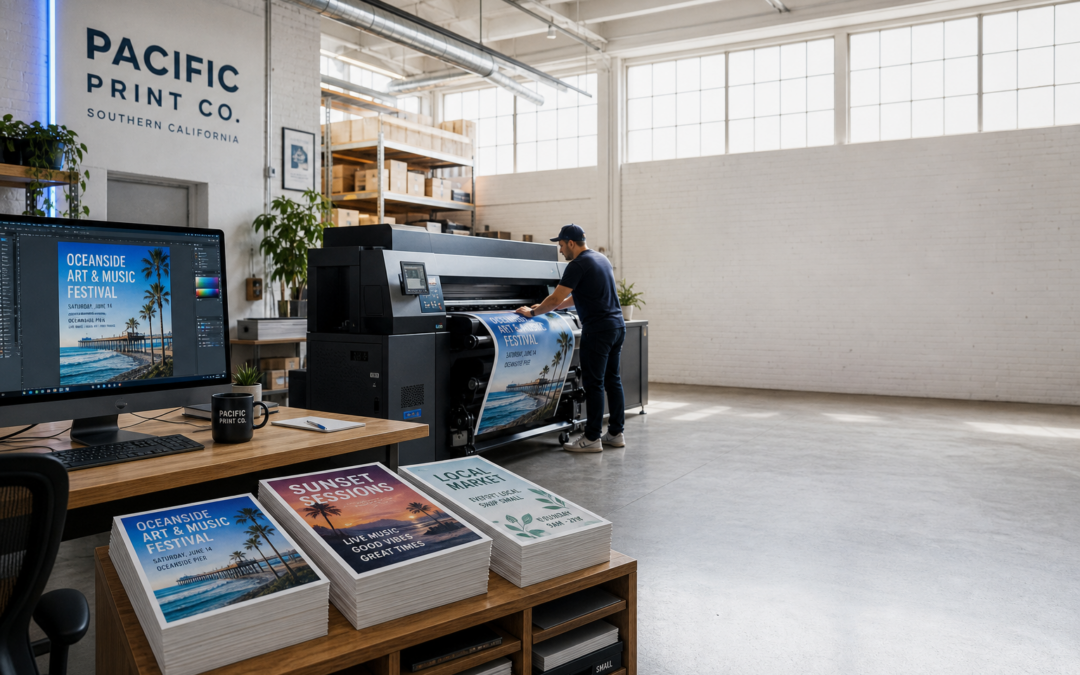
In 2026, printing services in Southern California have moved far beyond simple flyer distribution. Instead of generic, mass-mailed ads, successful businesses now deploy sharply targeted, data-driven campaigns that blend print and digital tools. The companies seeing real ROI treat print as a measurable, creative, and locally attuned marketing channel—using clear tactics to reach the right audience at just the right time. This guide breaks down the most common missteps, provides practical frameworks, includes authoritative references, and gives you step-by-step strategies to ensure your print marketing in California stands out and delivers measurable results.
Key Takeaways: Printing Services in Southern California, 2026
- Printing services in Southern California deliver the best results when combined with digital tracking, local content, and precise targeting—supported by industry data and case studies from reputable sources such as PRINTING United Alliance.
- Generic flyers are often ignored; customization—including local references and tailored offers—is essential for real engagement.
- Modern print campaigns leverage QR codes, personalized text, and dedicated landing pages to track outcomes—these tactics are recommended by marketing experts at American Marketing Association.
- The strongest flyer and printing services in Southern California offer flexible print runs, transparent pricing, and expertise in both design and distribution, as outlined in the SGIA Printing Industry Guide.
- AI and video can amplify print’s impact—think interactive QR codes or customized video landing pages—but work best as enhancements to well-designed, tangible materials, not as replacements.
Is Print Still Relevant in the 2026 California Marketing Mix?
Print marketing in Southern California remains highly relevant, but it’s changed. A common error is assuming print is outdated, when in reality, it’s often the most trusted way to connect with local audiences—a point echoed by Statista in their U.S. advertising insights. For instance, a West LA pediatric clinic handing out flyers showing staff members and local park events might notice more neighborhood word-of-mouth than from digital ads alone.
What sets 2026 apart is integration. The most effective marketers don’t treat print in isolation—they use flyers as direct-response tools, embedding QR codes that link to campaign-specific landing pages and tailoring offers for each neighborhood. Imagine a Costa Mesa bakery using flyers with a QR code for “free coffee with any pastry” that tracks redemptions; these kinds of campaigns routinely outperform untargeted digital ads, as supported by the PRINTING United Alliance. The lesson: print’s value now lies in specific, trackable, and local outreach—not in mass distribution.
The C.A.P.E. Framework for Print Success: A Practical Walkthrough
Defaulting to generic flyers leads to wasted budgets. The C.A.P.E. Framework—Customer, Asset, Placement, Evaluation—offers a step-by-step approach to running a results-driven print campaign in Southern California:
-
Customer: Get specific about your audience. Don’t just target “local residents.” Use CRM tools like HubSpot or Salesforce, and supplement with free demographic sources such as the U.S. Census Bureau or local property records. For example, an Irvine tutoring center might focus on parents of K-8 students living within a two-mile radius and tailor messaging to school schedules.
- Checklist: Identify your ideal customer, gather data, and create a customer profile with age, interests, and local habits.
-
Asset: Design flyers that feel personal and local. Instead of stock photos, use real photos of your team or familiar landmarks. Offers should be relevant and timely. Variable data printing (VDP) simply means customizing each flyer, such as addressing the recipient by name or referencing their neighborhood. For example, a Long Beach auto shop might show a map of nearby intersections and use a QR code linking to a “locals only” discount page.
- Plain English: VDP lets you personalize each flyer at scale, making recipients feel seen.
- Checklist: Use high-quality local images, local references, and clear, simple offers.
-
Placement: Skip blanket mailers. Instead, use data on foot traffic (see Placer.ai or Foursquare) or POS history to find the best distribution spots—coffee shops, community events, or direct mail to specific zip codes. For a Costa Mesa HVAC shop, placing flyers at farmers markets or with local realtors might deliver more leads than standard mail drops.
- Checklist: Research high-traffic areas, partner with local businesses for distribution, and target specific neighborhoods.
-
Evaluation: Use unique QR codes (from Beaconstac or QRCode Monkey), campaign-specific URLs (with Bitly), and custom landing pages (Unbounce or Instapage) to track every response. Run A/B tests on flyer designs and use Google Analytics UTM tags to see which version brings in more leads.
- Checklist: Set up unique tracking for each batch, monitor scans and visits, and compare results after each campaign.
Most wasted print budgets come from skipping these steps—especially tracking. The difference between a flyer that brings in new customers and one that ends up in the trash comes down to targeting, creative, placement, and simple tracking.
How to Choose the Right Flyer and Printing Service in Southern California
Selecting a print partner is about more than comparing prices. Here’s what actually impacts campaign results—and what to watch for, based on recommendations from the SGIA Printing Industry Guide and practical experience:
- Local Market Expertise: Choose printers who understand Southern California’s weather and style quirks—like using humidity-resistant paper for coastal towns, or UV-resistant inks to avoid sun-fade. For example, Laguna Beach campaigns with UV-coated flyers last longer outdoors.
- Flexible Runs and Personalization: Avoid printers who require large minimum orders or can’t personalize flyers. Short, targeted print runs let you test and improve campaigns affordably—a must for small businesses or those testing multiple offers.
- Integrated Design and Mailing: Print shops that handle design, printing, and mailing in one place save you time (and mistakes) compared to juggling multiple vendors. This is especially important for proofing colors and layouts.
- Transparent Pricing and Timelines: Always request a detailed quote and timeline. Watch for hidden set-up fees or unexpected rush charges—a common issue according to industry watchdogs like BBB.
For a detailed look at what impacts print costs in Orange County, see Flyer & Printing Services Cost in Costa Mesa: What to Expect in 2026.
Comparing Print Providers: Local vs. Regional vs. Online Printing Services in Southern California
Finding the right print provider in Southern California is about reliability and fit—not just price. Here’s a straightforward comparison, with guidance based on the Printing United Alliance and AMA recommendations:
| Provider Type | Strengths | Weaknesses | Best For |
|---|---|---|---|
| Local Print Shop | Personal service, local knowledge, fast proofing and turnaround for small jobs | Fewer advanced features, sometimes higher per-piece cost, less automation | Short runs, local targeting, hands-on projects needing a personal touch |
| Regional Print Network | Good balance of scale and customization, mailing services, consistent quality | Less nimble than locals, service quality can vary by branch | Mid-size campaigns, multiple locations, those needing both scale and some flexibility |
| Online-Only Printer | Lowest cost for large orders, self-service, lots of design templates | Impersonal support, slower problem resolution, little local nuance | Large, standardized campaigns managed by in-house teams |
| Hybrid/Marketing Agency | Strategic planning, digital integration, analytics, creative support | Higher minimum spend, not ideal for very small jobs | Businesses wanting a full-service, multi-channel approach |
Many California businesses end up switching providers after an underwhelming campaign—often learning that “cheap and fast” rarely means “effective and trackable.” Always match your campaign goals to provider strengths, not just price.
What Makes a Flyer Actually Work in 2026?
A flyer that brings in new customers doesn’t happen by accident. The most effective flyers in Southern California share these traits, as recommended by the American Marketing Association:
-
Hyper-Local Storytelling: The best flyers mention local events, landmarks, or issues. For example, a Laguna Beach real estate flyer showing Heisler Park or referencing the Sawdust Art Festival sparks instant recognition. For more, see Flyer & Printing Services for Laguna Beach Small Businesses: A Local Guide.
- Plain English: Hyper-local simply means mentioning things your neighbors care about—like a park, festival, or local school.
-
Single, Clear Offer: Flyers should focus on one main offer—such as, “Show this flyer for a free dessert at lunch.” Too many offers create confusion and lower response.
- Checklist: Stick to one call-to-action, and make the next step obvious.
-
Real Digital Hooks: Use QR codes, SMS opt-ins, or short URLs to move recipients online. What matters is sending them to a purpose-built landing page, not your homepage—this can double or triple engagement.
- Plain English: A QR code is a scannable square that lets people visit your promo page instantly with their phone.
A smart tactic: design flyers to be “leave-behind” assets—a calendar of local events, a coupon good for several weeks, or a mini-map. If your flyer is useful, recipients are much more likely to keep it and act later.
How Do Modern Print Campaigns Measure Results?
Most print campaigns fail to measure their results, relying on gut instinct instead of real data. In 2026, there’s no excuse for this. Here’s how to set up real attribution, following the best practices detailed by the AMA and PRINTING United Alliance:
- Unique QR Codes: Generate a different code for every flyer batch or distribution channel. Tools like Beaconstac or QRCode Monkey allow real-time scan tracking and geo-mapping.
- Custom Landing Pages: Build a simple, campaign-specific landing page (using Unbounce or Instapage) for each flyer offer—this lets you attribute leads directly to your print campaign.
- Redemption/Offer Codes: Assign a unique discount or offer code for each flyer run. Track redemptions in-store or in your CRM system. For example, a Santa Monica fitness studio might use a code only found on flyers given out at a street fair to measure results from that specific event.
It’s true that print attribution won’t match digital’s level of detail. But you can track directionality—if QR scans or flyer-driven leads go up after a campaign, or one flyer design brings in more redemptions, you’re making progress. For more on blending print and digital analytics, see The Business Case for Flyer & Printing Services Across the United States.
Where Does Print Fit With AI, Video, and Digital in 2026?
The smartest marketers in Southern California combine print and digital—they don’t choose one over the other. For example, flyers can drive recipients to short, AI-generated video explainers that increase engagement and conversion. Imagine a med spa flyer with a QR code launching a quick video demo—this kind of hybrid experience is quickly becoming mainstream, as noted in AI Brand Video Production Cost in 2026: Real Pricing.
Many campaigns go wrong by over-automating and losing the personal, tangible value of print. AI and digital tools should add to the print experience, not replace it. Savvy marketers use print to bring people to interactive video landing pages, then follow up with AI-powered chat or email. If you’re considering adding video, see 2026 AI Brand Video Playbook for Aesthetic Clinics for integration guidance.
Don’t overlook print’s ability to gather data. Well-designed flyers can prompt sign-ups, reviews, and survey responses that feed into your CRM system, making future AI-powered outreach more relevant.
Scenario Walkthrough: A Southern California Restaurant’s 2026 Print Campaign
Let’s walk through a real-world scenario: a mid-sized San Diego restaurant chain wants to boost weekday lunch business. Instead of blanketing the city with generic flyers, they use the C.A.P.E. Framework:
- Customer: They focus on downtown office workers within a one-mile radius, using LinkedIn insights and purchase history to refine their list.
- Asset: The flyer spotlights a limited-time lunch combo, features a QR code for instant online ordering, and includes a map showing nearby office towers.
- Placement: Flyers are distributed in lobbies of targeted office buildings and at local coffee shops during the morning rush.
- Evaluation: Each flyer batch uses a unique QR code, tracked through Google Analytics. The restaurant sees a steady increase in online orders directly tied to the flyer campaign—illustrating real, trackable ROI.
Compare this with a scattershot mailer—results are vague and attribution is impossible. The takeaway: precise targeting and tracking convert print from a guessing game into a repeatable, measurable channel.
How Much Should California Businesses Budget for Flyer and Printing Services?
There’s no universal price tag, but most California businesses find their flyer printing and distribution budgets typically fall somewhere in the low-to-mid four figures per campaign—though costs vary widely by quantity, print quality, and targeting method. This range is supported by the Printing United Alliance and the SGIA Printing Industry Guide. Premium stock, special finishes, and direct mail postage will increase costs.
The real mistake isn’t spending too much or too little—it’s mismatching your budget to your strategy. Pouring money into mass mailings with no targeting is almost always wasted; under-investing in creative or print quality produces forgettable campaigns. For a full breakdown of pricing factors, see Print Marketing & Flyer Design Costs in 2026: Real Pricing Insights and Print Marketing & Flyer Design: 2026 Guide for Orange County Med Spas.
Smart budgeting means:
- Define your audience and distribution plan before setting a print budget.
- Prioritize spending on design and messaging—a poorly designed flyer is unlikely to deliver results.
- Include costs for tracking tools (QR codes, landing pages) in your campaign budget.
- Allow enough time for proofing and delivery—rushed jobs can lead to expensive errors.
Budget at the higher end if you plan to use advanced features (like variable data or specialty finishes) or create flyers in multiple languages to connect with California’s diverse communities.
How to Future-Proof Your Print Marketing in California
The most effective print strategies in Southern California aren’t one-offs—they’re ongoing, iterative, and adaptive. Here’s what future-ready campaigns have in common:
- Test and Iterate: Treat each campaign as an experiment. Change one variable at a time—such as the offer, design, or location—and measure the result. Over time, you’ll build a local playbook of what works.
- Integrate Your Data: Feed print response data into your CRM and analytics tools, so your retargeting and AI outreach improve after every campaign. For more on this, see AI Content Creation and AI Data Analytics.
- Stay Agile: Printing technology and consumer habits change quickly. The businesses thriving in 2026 are those testing AI-powered design, experimenting with augmented reality flyers, and shifting to eco-friendly stocks as regulations evolve. For more on eco-friendly practices, see the EPA’s Sustainable Materials Management resources.
One last point: don’t chase every print or digital trend. Focus on what you can measure, what your audience values, and what consistently drives results. If you need expert help, consider consulting a local print specialist or marketing strategist with real experience in the Southern California market—Lion Click Media is one such option among many.
As print and digital continue to overlap, the winners will be those who combine creativity with data, local relevance with real measurement, and tangible print with smart digital follow-up for truly integrated, high-impact campaigns.
Frequently Asked Questions
How much do flyer printing services cost in Southern California?
Costs vary widely depending on quantity, paper quality, and finishes; many local businesses budget somewhere in the low-to-mid four figures for comprehensive campaigns.
Are digital flyers better than printed ones in 2026?
Digital flyers excel for wide reach and speed, but printed flyers still outperform when targeting local foot traffic and creating memorable tactile experiences.
Can I track the effectiveness of flyer campaigns accurately?
Yes, by using unique promo codes, QR codes linked to custom landing pages, or dedicated phone numbers, you can measure which flyers drive real engagement.
What types of businesses benefit most from flyer and printing services in Southern California?
Local businesses with physical locations or community presence—like retail shops, fitness studios, and service providers—often see the most impact from flyer campaigns.
Is AI video creation expensive to integrate with flyer marketing?
AI-assisted video creation can be cost-effective by speeding production and tailoring content, making it accessible even for small to mid-sized businesses.
How often should I update my flyer designs?
Updating flyers seasonally or quarterly allows you to test new messaging and keep content fresh, especially when paired with real-time analytics.
Are sustainable printing options widely available in Southern California?
Yes, many printers now offer eco-friendly paper stocks and soy-based inks, which align well with California businesses focused on sustainability.
Get Your Free AI Marketing Audit
See exactly where you are leaving leads on the table and how Lion Click Media can help you rank higher, capture more customers, and Make Your Brand ROAR. No cost, no obligation.
Claim My Free Audit →Or chat with our 24/7 AI assistant (bottom-right) for instant answers.