
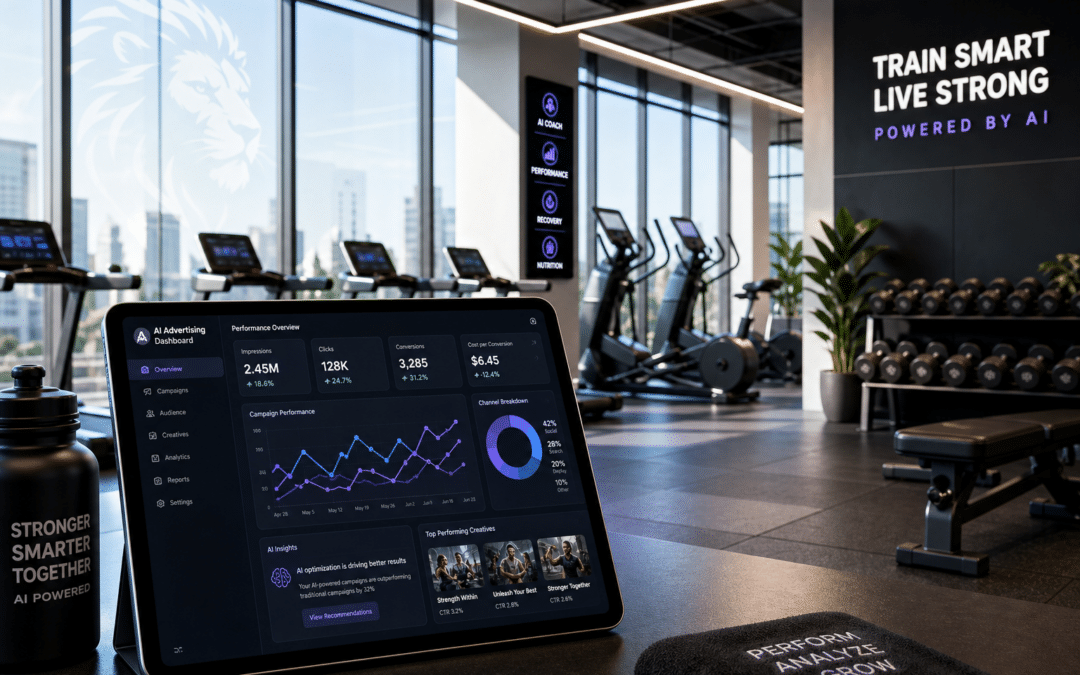
Thinking about AI advertising management for your fitness studio? Here’s the straightforward answer: AI tools aren’t just a technical upgrade—they’re becoming a practical necessity for studios that want to grow membership, avoid wasted ad spend, and keep up with changing marketing tactics. Real-world results show that AI-driven PPC and automation can bring in better leads and help member retention by constantly improving campaigns and catching things that manual management often misses. But real success comes from using AI as a valuable assistant, not a hands-off shortcut. Combine smart automation with hands-on strategy and clean data, and you’ll put your studio in the strongest position for steady growth. Below, we break down what matters most for fitness studios aiming to get a true return from AI-powered advertising, with a clear look at supporting evidence and practical steps.
Key Takeaways
- AI advertising management generally delivers stronger results than manual PPC for fitness studios, with cited data showing improvements in landing page conversion rates and member retention (VesperOps, US Tech Automations).
- The biggest benefits aren’t just lower ad spend—they come from smarter campaign optimization, time savings, and automating follow-up, waitlist management, and retention workflows.
- Studios that treat AI as a helpful decision-support tool, while still using human judgment for offers and messaging, see the most reliable marketing ROI.
- Choosing the right AI approach—DIY, hybrid agency, or platform-native—depends on your studio’s data quality, how you work, and your growth goals.
- Automation that continues after the ad click (like lifecycle emails and waitlist reminders) is a key driver of long-term ROI, as shown by multiple research-backed case studies (US Tech Automations, OS For Your Business).
Is AI Advertising Management Actually a Fit for Fitness Studios?
Many fitness studios still approach PPC campaigns with basic tactics—setting up a few Google or Meta ads, picking some keywords, and hoping for the best. There’s a common misconception that AI ad management is just for big gyms or chains. But because fitness marketing is fast-paced and hyper-local, studios are actually a great fit for AI and machine learning.
AI tools are strong at real-time campaign adjustments: they can test headlines and offers, shift budget, and change ad placements quickly based on what’s driving class bookings or new memberships. For example, an AI-driven campaign might notice that a “free class pass” ad gets more clicks from early-morning audiences in January, while a discount membership works better for weekend afternoons. These quick shifts are tough to manage by hand.
However, one of the biggest mistakes studios make is thinking AI works like a “plug-and-play” robot. Better results come when owners and marketers use AI as a partner: they review the data and insights AI provides, then make choices about offers and messaging to keep campaigns on-brand and relevant to local members.
What Does Real ROI Look Like for Fitness Studios Using AI?
Return on investment (ROI) in fitness isn’t just about the cost per lead. What matters most is what happens after someone clicks—how you nurture those leads, whether they become paying members, and how long you keep them. A common trap is focusing only on ad efficiency and ignoring how automation can impact your bottom line across the member journey.
Take automated waitlist management as an example: according to US Tech Automations, fitness studios implementing this technology have seen a noticeable increase in recovered annual revenue compared to the cost of automation. The impact isn’t just about running better ads—it’s also about catching missed opportunities that manual systems often overlook. Or, consider the case of a real Austin studio, as shared by OS For Your Business, which saw a drop in monthly churn and a significant boost in retained annual revenue after rolling out AI-powered member management. These are clear, cited examples of how automation and AI can directly improve financial performance.
To truly understand ROI, studios should look beyond the ad itself and include the retention and automation effects in their calculations. By considering these factors, the case for adopting AI becomes much stronger.
How Do AI PPC Campaigns Outperform Traditional Fitness Studio PPC?
Traditional fitness studio PPC relies on manual bid changes, fixed keyword lists, and occasional creative refreshes. AI-powered campaigns, by contrast, use real-time data to fine-tune every part of the funnel—from which headlines work best at lunchtime to which ad groups are wasting budget on less relevant clicks.
It’s important to note: AI doesn’t just automate tasks—it changes how you target audiences and follow up with leads. For example, AI can spot smaller, more specific audience segments—like yoga fans who only respond to a “first class free” offer—or pinpoint time windows when sign-ups are most likely. According to VesperOps, studios using AI-driven lead generation have achieved landing page conversion rates that are noticeably higher than typical industry averages, based on their dataset. While these results are reported by a marketing vendor, they help illustrate what’s possible when campaigns are actively optimized by AI.
It’s easy to assume AI can be left to run on its own, but the most effective fitness marketers regularly review AI findings—checking patterns, updating offers, and using these insights to inform bigger decisions, like class times or pricing. Treating AI as a weekly check-in tool rather than “fire-and-forget” makes all the difference.
AI Advertising Management vs. DIY: What’s the Real Trade-Off?
Many studio owners try to run PPC ads themselves, thinking a few hours a week in Google Ads or Meta Business Suite is enough. But the main cost isn’t just in setting up ads—it’s in missed optimization and lost time.
AI advertising platforms review thousands of data points each day, adjusting bids, targeting, and creative in ways that would be hard for a human to match. For instance, an AI tool could pause low-performing ad sets overnight, shift budget to a new audience by midday, and rotate in a fresh offer before peak hours—all while a DIY manager is still reviewing yesterday’s numbers. While these examples are typical of how AI systems work, exact results will vary by platform and setup.
It’s also worth noting that AI isn’t a fix-all. If your data is messy—like duplicate leads, broken tracking, or inconsistent CRM entries—AI can actually make those problems worse. The studios that succeed are the ones that take time to clean up their data and confirm their conversion tracking is working before letting AI optimize their campaigns.
Framework: The S.T.R.I.D.E. Checklist for Fitness Studio AI Ad Success
To help studios turn AI into a practical advantage, here’s a step-by-step S.T.R.I.D.E. checklist you can use to get the most from AI advertising management. While this framework is newly developed for fitness studios and not yet widely recognized in the industry, it draws on best practices for local service businesses using AI:
- Set Clear Conversion Goals: Define what counts as success for your ads—a booked trial, a paid membership, or a class pass sale. Make sure these actions are tracked in your CRM or booking system.
- Tune Your Data Inputs: Audit all your lead sources and CRM fields for duplicates. Fix any broken tracking links, and double-check that your landing pages match your ad messaging. Tools like Google Tag Manager or HubSpot can help organize this process, but any system will work as long as tracking is accurate.
- Review and Refine Creative Weekly: Don’t let AI run the same ads for weeks on end. Every week or two, check your ad platform reports for which headlines, images, or offers are working, and swap out anything underperforming.
- Integrate with Automation: Link your AI PPC stack to automated follow-up tools—such as waitlist management or lead nurturing via SMS or email. This can be done through platforms like Zapier, Klaviyo, or more neutral workflow tools like Make or native CRM automations, so no hot lead slips through the cracks.
- Diagnose Drops in Performance Promptly: Use platform analytics (Google Ads Insights, Meta Ads Manager, etc.) to spot any sudden dips in clicks or conversions. Don’t just assume “the algorithm will fix it”—troubleshoot quickly to address problems.
- Expand or Narrow Targeting as Needed: Let AI suggest promising new audience segments, but don’t hesitate to manually exclude segments or test new geographies and offers as your studio’s trends change. Third-party tools like AdEspresso or WordStream can offer additional flexibility for small teams.
Studios that consistently follow these steps—rather than “setting and forgetting”—see much more reliable marketing ROI. The S.T.R.I.D.E. checklist is a practical process, not an industry standard, but it reflects what separates high-performing AI campaigns from mediocre ones.
Which AI Advertising Management Solutions Make Sense for Fitness Studios?
There are many AI ad management choices: DIY tools, standalone platforms, and full-service agencies all promise results. The right fit depends on your studio’s size, comfort with technology, and how involved you want to be in daily campaign management.
Here’s a side-by-side look at four common options, with a focus on practical trade-offs for fitness studios:
| Solution Type | Key Benefits | Trade-Offs | Best For |
|---|---|---|---|
| DIY AI Platforms (e.g., AdEspresso, WordStream) | Generally affordable, flexible, and provide direct control. Built-in automations help with ad testing and reporting. | Requires a time investment and some learning. Data integration may be less seamless depending on your current systems. | Studios with in-house marketers and moderate technical skills. |
| Hybrid AI/Agency Solutions | Blend automation with expert oversight. Agencies set up and optimize campaigns, but you still have input and visibility. | Usually cost more; you may have less day-to-day control. Results can depend on how much fitness experience the agency brings. | Growing studios looking to delegate but wanting regular involvement. |
| Full-Service AI Marketing Agencies | Handle everything—campaign setup, ongoing management, analytics, and creative services. | Come at a higher price and may not suit studios with very specific or hyper-local needs. | Studios with multiple locations or those seeking a hands-off, “done-for-you” approach. |
| Platform-Integrated AI (Meta Advantage, Google Performance Max) | Included with ad spend, built right into ad platforms, and easy to set up and launch. | Less customization; may not optimize for your studio’s unique goals and offers. | Studios just starting out or running simple campaigns. |
Most studios do best by starting simple—using platform-integrated AI or a DIY tool—then scaling up as they grow. For those considering outside help, even a single consultation with an AI marketing agency can clarify which path fits their current stage and growth plans.
What Are the Most Overlooked Drivers of Fitness Marketing ROI?
Many studio owners focus only on cost per lead or new sign-up numbers. But often, the real drivers of ROI are member retention and automation. It’s easy to forget how much difference member lifecycle automation can make for long-term revenue.
According to US Tech Automations, studios using member lifecycle automation retain a noticeably greater share of members at the 90-day mark compared to those relying only on manual follow-up. Automations like personalized email sequences, triggered SMS reminders, and waitlist management don’t just fill classes—they help members stay engaged and reduce churn, which often matters more for your bottom line than simply generating more leads.
In practice, don’t just ask if your pay-per-click ads are “working.” Ask how many of those new leads are still active members three months later, and what automations are in place to maximize their lifetime value. For more practical ideas on integrating AI and automation through your marketing funnel, see Is AI Live Chat & Lead Capture Worth It for Fitness Studios?.
How Do Real Fitness Studios See AI’s Impact? (Scenarios & Case Examples)
Imagine a boutique fitness studio launching AI-powered ads for a new HIIT class. The AI system learns that “first week free” Facebook ads attract more sign-ups on Thursday afternoons, while Google Ads are better for membership sales on Sunday evenings. The manager reviews these patterns weekly, tweaks creative, and moves class schedules to match demand. Soon, they notice a steadier stream of leads and fewer no-shows, thanks to automated SMS reminders. This scenario illustrates a typical experience, not a guaranteed outcome.
For a real-world example, the Austin studio mentioned by OS For Your Business invested in member management automation, which coincided with a drop in churn and a boost in retained revenue. While this is a single case, it shows the kind of operational improvements possible when AI and automation are used together.
Studios that treat AI as a partnership—combining machine learning with human oversight—consistently outperform those looking for a quick fix. For comparisons with other fitness-adjacent businesses, see The 2026 AI Advertising Playbook for Chiropractors.
What Are the Honest Limitations and Caveats of AI Advertising Management?
AI advertising management isn’t a silver bullet or a “set-and-forget” solution for weak offers. The main risk is neglecting the human side—like failing to refresh creative, ignoring customer feedback, or letting bad data pollute your campaigns.
AI can only optimize what it’s given. If your messaging doesn’t connect, your offers aren’t compelling, or your booking flow is slow or confusing, AI won’t fix those issues—it’ll just help you reach that outcome faster. For example, AI can identify which ad performs best, but it won’t rewrite your landing page or overhaul your member experience. Studios expecting AI to “save” an otherwise weak marketing setup will likely be let down.
There’s also a learning curve, and some platforms need a certain amount of data to work well. Studios with very small budgets or inconsistent campaigns may see less dramatic results. Plus, privacy rules and changes in ad platforms can disrupt automated strategies, so staying informed is important. For a bigger-picture look at how AI is changing marketing team roles, see The Latest Jobs in Search Marketing: AI-Driven Roles.
Practical Steps: How to Set Up AI Advertising for a Fitness Studio
Setting up AI-powered advertising is more about following a clear process than picking the latest tech. Here’s a practical, step-by-step playbook based on real fitness PPC workflows:
- Audit Your Current Data: Check that your CRM, booking software, and web analytics are tracking key actions—like trial signups, class bookings, and cancellations—consistently and accurately.
- Select an AI-Ready Platform: Choose a tool or agency that integrates smoothly with your systems. Focus on platforms that automate both ad optimization and follow-up workflows (for example, Google Performance Max linked to neutral automation tools like Make, or via native CRM integrations).
- Define Your Success Metrics: Go beyond clicks—track real booked trials, paid memberships, and retention at 90 days as your main measures of success.
- Launch with a Test Budget: Start with a daily ad spend that’s reasonable for your studio—enough for the AI to learn, but not so much that errors become costly. Monitor results closely during the learning phase, then shift to weekly reviews as things stabilize.
- Integrate Automation Beyond Ads: Link your AI PPC campaigns to automated email and SMS follow-up, waitlist management, and special offers for lapsed leads. This can be achieved using platforms like Klaviyo, ActiveCampaign, or your studio’s built-in CRM capabilities—choose what fits your workflow best.
- Review and Adjust: Set a recurring calendar reminder to check creative, negative keyword lists, and automation triggers. AI works best with fresh, high-quality inputs.
Studios that follow this playbook often notice their campaign performance improving within the first month. For step-by-step guidance on automating your digital presence beyond just ads, see AI Social Media Management: Boost Engagement & Authority.
Summing Up: Is AI Advertising Management Worth the Investment?
For fitness studios focused on growth—and willing to invest time in keeping their data clean and staying involved—AI advertising management is quickly becoming the standard, not just a bonus. The top performers don’t chase every new tool; they use AI to save time, automate follow-up, and keep more members engaged.
ROI comes from a mix of smarter lead generation, automation, and retention—not just from trimming ad costs. According to Web Tonic™, the average return on ad spend for fitness campaigns is 2.87:1, with top campaigns sometimes achieving higher. Studios using AI-driven lead gen and lifecycle automation typically outperform those using only manual methods in both conversion and retention (VesperOps, US Tech Automations).
Bottom line: AI-powered advertising doesn’t replace human judgment—it enhances it. Studios that blend automation with hands-on strategy will be best positioned to succeed as competition heats up. For a deeper look at fitness studio marketing ROI, see Is AI Advertising Management Worth It for Fitness Studios?. Lion Click Media supports fitness studios nationally and internationally, but the principles above apply to any studio ready to modernize its marketing.
Frequently Asked Questions
Is AI advertising management expensive for small fitness studios?
It can be, depending on budget and goals; smaller studios with limited ad spend might find partial AI tools or manual PPC more cost-effective.
How quickly can AI PPC improve my fitness studio’s lead generation?
Improvements typically appear after a few weeks to months, as AI needs data to optimize bids and targeting effectively.
Can AI handle creative content for fitness ads?
AI can assist by testing and optimizing ad copy and visuals, but human input remains critical for brand voice and messaging.
Does AI replace human campaign managers?
No, the best results come from AI-human collaboration where AI handles data-driven optimization and humans guide strategy and creative choices.
Which platforms should fitness studios focus AI advertising on?
Google Ads and Meta are foundational, but emerging channels like TikTok and YouTube offer valuable reach for younger or video-focused audiences.
How do I measure ROI for AI advertising in fitness?
Track conversions that matter—trial sign-ups, memberships, or class bookings—and compare cost per acquisition before and after AI implementation.
What’s the biggest mistake studios make with AI PPC?
Relying on AI as a set-it-and-forget-it solution without ongoing human oversight and integration into broader marketing efforts.
Get Your Free AI Marketing Audit
See exactly where you are leaving leads on the table and how Lion Click Media can help you rank higher, capture more customers, and Make Your Brand ROAR. No cost, no obligation.
Claim My Free Audit →Or chat with our 24/7 AI assistant (bottom-right) for instant answers.