
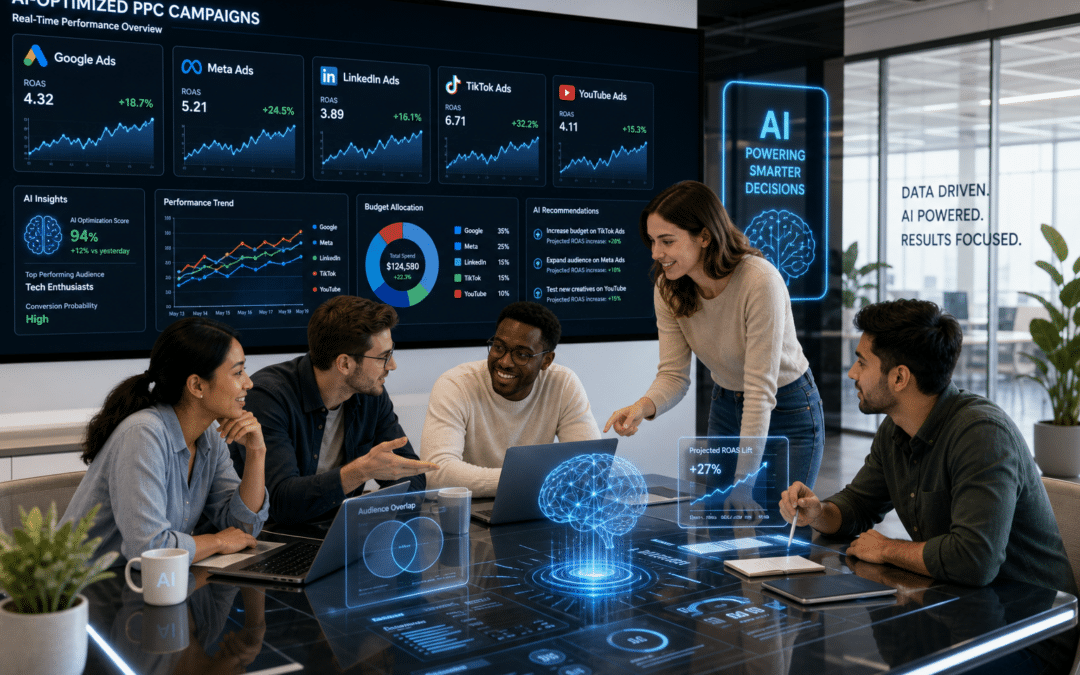
The latest jobs in search marketing aren’t just changing—they’re fragmenting and specializing at breakneck speed as AI, automation, and real-world business demands upend old role descriptions. Businesses that cling to yesterday’s job titles or focus on generic skills risk falling behind. Instead, the winners are those who understand how new hybrid roles—like AI-savvy SEO analysts, automation-first PPC specialists, and campaign managers who can wrangle generative AI—actually work in practice, and who hire for adaptability and scenario-based problem solving, not just credentials. Here’s what’s changing, why it matters, and exactly what to look for in the next wave of search marketing hires.
Key Takeaways
- AI and automation are fundamentally reworking search marketing jobs, driving demand for hybrid technical and creative skill sets.
- Real-world expertise with tools like Google Performance Max, ChatGPT, and anomaly detection platforms matters more than certification badges alone.
- Ad fraud and rapid AI-driven change require hands-on, vigilant oversight—successful teams adapt faster than the algorithms themselves.
- Effective hiring now means probing for scenario-based problem solving and cross-channel fluency, not just traditional job titles or years of experience.
- Future-ready teams are built on a framework of specialization, experimentation, adaptability, clear responsibility, cross-channel integration, and human insight.
Is Search Marketing Still Distinct—Or Just ‘Digital Marketing’ Now?
It’s tempting to lump search marketing into a catch-all “digital marketing” bucket, especially as platforms overlap and AI blurs old boundaries. But this is a costly mistake. While it’s true that social, video, paid search, and organic are converging, treating search as an afterthought means missing out on the deep technical and strategic gains that specialized roles deliver.
For example, while a general digital marketer might set up basic campaigns, a search specialist is now expected to measure prompt-level visibility in emerging AI-powered search engines—a skill set explored in this deep dive on AI search measurement. The difference isn’t just semantic; it’s the difference between executing the basics and actually influencing the entire customer discovery journey.
Businesses that treat search as secondary often leave money—and market share—on the table. Today’s search marketing jobs go well beyond keyword research or basic bid management. They involve orchestrating the entire discovery process, leveraging AI-driven insights, technical SEO tactics, and real-time data to get—and keep—customers’ attention.
How Are AI and Automation Reshaping Search Marketing Roles?
AI isn’t just a buzzword in search marketing; it’s a force reshaping daily work, job descriptions, and hiring priorities. According to the Search for Hire SEO Hiring Trends 2026 report, 20.4% of SEO job postings by mid-2026 included AI search skills, up from just 12.2% in December 2025—a stark signal that AI expertise is fast becoming a must-have.
This shift isn’t about plugging AI tools in for manual labor. It’s about integrating AI into complex workflows: clustering keywords using machine learning, analyzing user intent with predictive models, optimizing campaigns with automated bidding engines, and managing generative ad formats. For example, a skilled PPC specialist is now expected to design and monitor AI-driven bidding algorithms—often collaborating with data engineers or troubleshooting model outputs in real time.
The misconception is that automation will replace jobs. In reality, it’s transforming them. SEO analysts, for instance, now need to experiment with schema markup tailored to AI-powered search and optimize for voice and conversational interfaces. Those who treat AI as “set and forget” quickly find that, without human oversight and creative scenario planning, performance stagnates—or worse, ad budgets get wasted on fraud.
When hiring, it’s no longer enough to ask if someone has used an AI tool. Dig for specifics: Have they rolled out GPT-driven ad copy variations? Built automated negative keyword lists using search query analytics? Designed prompts for generative search engines? Teams built on hands-on, scenario-tested skills are the ones that stay ahead.
What Are the Latest Jobs in Search Marketing—And What Do They Actually Do?
Job titles are multiplying, but not all new roles are created equal. Here’s a breakdown of the most in-demand, high-impact positions, and what sets them apart in practice:
- PPC Specialist (AI-Enhanced): Manages more than just Google and Bing Ads. Architects AI-powered bidding strategies, oversees dynamic creative testing, uses platforms like Google Performance Max for campaign optimization, and employs anomaly detection tools to flag ad fraud. Interpreting and acting on AI-generated insights is the baseline.
- SEO Analyst (AI Search Focus): Goes far beyond site audits. Experiments with schema markup for AI search, optimizes content for voice and conversational interfaces, and analyzes site visibility in AI-driven search platforms. According to Search for Hire, professionals with AI search skills command a 20% higher median salary ($117,500 vs. $97,500).
- Marketing Automation Manager: Evolved from managing email workflows to orchestrating automation across PPC, SEO, and social. Owns the martech stack (think HubSpot, Zapier, Segment), ensures clean data flows, and designs adaptive customer journeys.
- AI Advertising Campaign Manager: A new hybrid role combining creative direction, prompt engineering, and performance analytics. Oversees campaigns using generative AI for video, image, and text ads; stays ahead of evolving AI ad policies and fraud risks. According to the IAB’s 2025 Digital Video Ad Spend & Strategy Full Report, generative AI is projected to account for 40% of all video ads by 2026, making this skillset critical.
Picture a retail brand hiring an AI Advertising Campaign Manager: This person isn’t just launching ads—they’re testing new generative video formats, integrating dynamic creative with inventory data, and using AI to identify micro-segments for tailored, real-time messaging. For more context on how AI-driven campaigns are managed in the wild, see this comparison of agency-managed versus DIY AI advertising in the HVAC industry.
What Skills and Tools Actually Set Candidates Apart?
Too many hiring managers default to certifications and platform badges. But in practice, badges are table stakes—what separates top performers is hands-on fluency with real-world tools and adaptive problem-solving. Here’s what actually moves the needle:
- AI Tool Fluency: Experience with platforms like Google Performance Max, ChatGPT for ad copy, Jasper, Surfer SEO, or SE Ranking for content optimization. The best candidates can explain not just how they used these tools, but why—and what they did when results deviated from expectations.
- Scenario-Based Thinking: Can model campaign outcomes, anticipate AI-driven shifts in search algorithms, and design contingency plans. For instance, if ad fraud suddenly spikes (as it frequently does—see more below), how would they diagnose and respond?
- Cross-Channel Integration: Impact in search marketing increasingly requires connecting SEO, PPC, social, and content workflows. As explored in this article on why ROAS depends on paid social, those who understand channel interplay consistently drive stronger results.
- Continuous Learning: The most valuable hires are those who pursue test-and-learn opportunities—experimenting with new prompt engineering techniques, joining beta programs for emerging ad formats, or regularly sharing learnings across the team.
A common hiring pitfall: focusing on a static list of skills instead of a candidate’s ability to adapt and experiment. The search landscape isn’t just changing—it’s accelerating. Building a team that can learn on the fly is now as important as what they know on day one.
AI Advertising Campaigns: Opportunity Meets New Risks
AI-driven advertising is unlocking powerful opportunities for creative, scalable campaigns—but it’s also raising the stakes for risk and oversight. For instance, by 2026, generative AI is projected to account for 40% of all video ads, with 86% of advertisers already using or planning to use it (IAB’s 2025 Digital Video Ad Spend & Strategy Full Report). This shift gives marketers new creative capabilities, but also opens the door to new forms of ad fraud.
The numbers are staggering: global losses from ad fraud reached $32.6 billion in 2025, affecting 4.81% of ad traffic on average—and in some cases, more than 1 in 5 clicks on certain networks (TechRadar Pro). What does this mean for hiring? It’s no longer enough to find someone who can simply run campaigns. You need search marketers who actively monitor for fraud, audit click patterns, and use AI-powered detection tools.
Imagine a PPC specialist spotting a sharp uptick in clicks from a single channel. Instead of celebrating, they use anomaly detection platforms (such as ClickCease or Fraud Blocker) to trace the source, flagging a potential fraud ring. Their true value is in protecting ad budgets—not just spending them. For practical, industry-specific examples, see this case study on AI advertising management for fitness studios.
Framework: The S.E.A.R.C.H. Checklist for Building a Modern Search Marketing Team
To navigate today’s hiring and team design decisions, use the S.E.A.R.C.H. Checklist—a practical, scenario-driven framework for assembling a future-ready search marketing team. Here’s how to apply each step, with concrete actions for hiring and management:
- Specialization: Pinpoint which roles require deep expertise vs. broad familiarity. For example, AI-trained SEO analysts should demonstrate hands-on work with schema markup for AI search engines—not just theory. For PPC, probe for real experience with Google Performance Max and fraud-detection workflows.
- Experimentation: Dedicate budget and time for staff to test new tools and strategies. Run small pilots—like trialing Jasper for content generation or experimenting with automated bidding rules—before scaling. Require regular sharing of results (including failures) to ensure continuous learning.
- Adaptability: In interviews, ask for examples of campaigns that required sudden pivots—such as responding to a major Google algorithm update or a spike in fraudulent clicks. Look for evidence of comfort with ambiguity and change.
- Responsibility: Assign clear owners for high-risk areas. Someone should be explicitly responsible for monitoring ad fraud, keeping up with AI policy changes, and ensuring campaign compliance. Make these duties explicit in job descriptions, not just “other duties as assigned.”
- Cross-Channel Integration: Break down silos by creating shared KPIs and regular meetings between SEO, PPC, and automation leads. Use tools like Segment or Looker Studio to unify reporting and encourage collaboration.
- Human Insight: Don’t just hire data jockeys. Seek candidates who can interpret analytics, challenge assumptions, and tie search activity to real business outcomes. In practical terms, this means asking for campaign post-mortems—not just success stories—during interviews.
For example, if you’re evaluating a marketing automation platform, don’t just check if the candidate can set it up. Ask how they would experiment with workflow triggers, adapt to evolving privacy rules, and coordinate with PPC and SEO leads for unified reporting. For a more detailed look at scenario-based hiring, see this guide to AI-driven search marketing jobs.
Comparison Table: Major Search Marketing Job Roles in 2026
| Role | Key Responsibilities | Required Skills | AI/Automation Focus | Ideal Background |
|---|---|---|---|---|
| PPC Specialist | Campaign management, AI bidding, fraud monitoring, reporting | Platform fluency (e.g., Google Ads, Performance Max), data analysis, anomaly detection (ClickCease, Fraud Blocker) | High—designs and oversees automated campaigns | Paid search, analytics, performance marketing |
| SEO Analyst | Technical audits, AI search optimization, schema markup | SEO tools (Surfer, SE Ranking), AI prompt engineering, structured data | Medium to high—optimizes for AI-powered search | SEO, content, web development |
| Marketing Automation Manager | Workflow design, martech stack management, cross-channel integration | Automation tools (HubSpot, Zapier), CRM, process design | High—owns automation infrastructure | Email, CRM, digital operations |
| AI Advertising Campaign Manager | AI creative direction, prompt engineering, compliance, performance monitoring | Generative AI tools (ChatGPT, Jasper), video ad formats, analytics | Very high—focuses on generative and AI-driven ads | Creative, analytics, AI marketing |
What Should Businesses Really Look for When Hiring?
Most companies still default to the same tired checklist: AdWords certifications, years of experience, and a handful of “soft skills.” But in today’s market, those are just the price of admission. The real differentiators are scenario-based problem solving, cross-discipline collaboration, and the ability to tie search marketing directly to business results.
One overlooked tactic: Conduct scenario interviews and portfolio reviews. Ask candidates to walk you through a campaign where they had to troubleshoot an AI automation gone wrong or pivot SEO strategy after a sudden algorithm update. Look for evidence of critical thinking and learning, not just process-following.
It’s also crucial to probe for genuine cross-discipline collaboration. Can your prospective SEO analyst work constructively with video, social, and automation leads? For hiring frameworks, templates, and more nuanced examples, see this hiring guide for AI-driven search marketing jobs.
- Ask for campaign post-mortems, not just wins—how did they handle setbacks?
- Value adaptability and a learning mindset over tenure or a static skillset.
- Prioritize candidates who connect search efforts to actual business outcomes, not just channel metrics.
What Are the Trade-Offs of Specialization vs. Generalization?
Should you hire a jack-of-all-trades digital marketer, or invest in narrowly focused specialists? The answer depends on your business goals and current team makeup. Specialists bring deep, up-to-date knowledge and can quickly spot technical or compliance issues—critical in areas like AI search or campaign automation. However, too much specialization risks siloed thinking and missed opportunities for cross-channel synergy.
On the flip side, broadly skilled generalists can bridge channels and adapt quickly, but may struggle to keep pace with fast-evolving search marketing tools. For most companies, the smart move is a hybrid approach: anchor your team with one or two deep specialists (such as an AI-savvy SEO analyst or a data-driven PPC lead), then add flexible generalists who can connect the dots and step in as needed.
For more on balancing team structure, see how AI-powered social media management overlaps with search and ways advanced data analytics can unify reporting across channels.
Real-World Scenarios: How Modern Search Marketing Roles Play Out
To make these shifts concrete, here are two practical examples:
Scenario 1: AI-Powered Ad Campaign for a Fitness Studio
A fitness studio launches an AI-driven video ad campaign using generative video tools. The AI Advertising Campaign Manager coordinates with the automation lead to personalize ads by class type, audience segment, and time of day. When a spike in fraudulent clicks appears, the PPC specialist uses anomaly detection software to isolate suspect traffic and shifts budget to higher-performing campaigns—minimizing losses and maximizing ROI. More on this approach in this fitness studio case study.
Scenario 2: SEO Analyst Navigates an AI Search Algorithm Update
A B2B SaaS company sees organic traffic drop after a major AI-driven search update. Their SEO analyst, experienced in prompt engineering and AI search optimization, quickly tests new schema markup and conversational content formats—helping the company regain lost visibility. For a deeper look at how content strategy must evolve for AI search, see this guide to AI content creation and Google’s 2026 update.
These examples make it clear: success in search marketing today is about scenario-based problem solving, continuous learning, and adapting alongside technology—not just performing static tasks.
How Can Businesses Future-Proof Their Search Marketing Teams?
The pace of change in search marketing roles is only accelerating. The U.S. in-house marketing job market rebounded by 16% in new postings in Q1 2026, signaling renewed hiring demand for teams with up-to-date skillsets (Taligence U.S. Marketing Jobs Report Q1 2026). For those hiring, the key is to build teams that prioritize continuous upskilling, scenario planning, and role fluidity.
One actionable insight: don’t just train your team on today’s tools—train them to evaluate and adapt to tools that haven’t even launched yet. Encourage regular knowledge-sharing sessions, experiments with emerging AI content platforms, and build reporting dashboards that can flex to new KPIs and attribution models. For more on why this matters, see how AI content strategy is evolving.
Ultimately, while AI and automation are now table stakes, human creativity, ethical judgment, and strategic integration remain irreplaceable. Success comes from hiring—and continually developing—search marketers who understand both the nuances of new technology and the bigger business picture. For those wanting practical hiring advice with a global perspective, agencies like Lion Click Media in Orange County, CA, can offer a useful starting point—but the real work begins with building your own future-ready team.
Frequently Asked Questions
What are the most in-demand skills for search marketing jobs in 2026?
The most in-demand skills include AI platform fluency for PPC, cross-channel campaign management, data analytics focused on ROAS and attribution, and SEO automation experience.
Can small businesses afford to hire AI Advertising Campaign Managers?
Small businesses often find hiring full-time AI Advertising Managers costly and may benefit more from partnering with AI-powered marketing agencies that offer scalable expertise.
How does AI change the role of a PPC specialist?
AI automates bid management and audience targeting, shifting the PPC specialist's role toward strategy, AI oversight, and creative optimization rather than manual adjustments.
Is SEO still relevant with AI content tools taking over?
SEO remains essential, but roles now focus on integrating AI content tools with technical SEO skills like schema markup and Core Web Vitals monitoring.
How quickly are search marketing job descriptions evolving because of AI?
Job descriptions are evolving rapidly, with AI proficiency becoming a baseline requirement in many search marketing roles within the last couple of years.
What should businesses prioritize when choosing between in-house hires and agencies?
Businesses should weigh control and deep brand knowledge from in-house hires against the cost-efficiency and scalability of AI-powered agencies, aligning with their campaign complexity and budget.
Are there any certifications that help in hiring qualified search marketing professionals?
Certifications from platforms like Google Ads, Meta Blueprint, and data analytics courses add credibility, especially when paired with hands-on experience in AI-driven campaign tools.
Get Your Free AI Marketing Audit
See exactly where you are leaving leads on the table and how Lion Click Media can help you rank higher, capture more customers, and Make Your Brand ROAR. No cost, no obligation.
Claim My Free Audit →Or chat with our 24/7 AI assistant (bottom-right) for instant answers.