
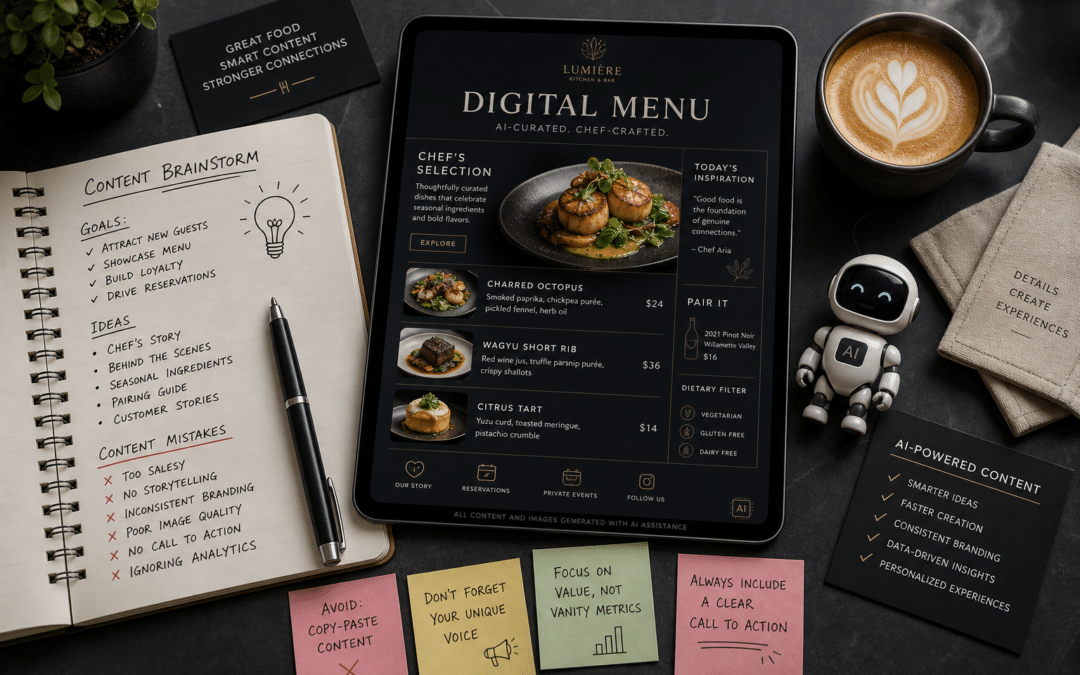
Most restaurants are quietly leaking leads because of subtle but fatal AI content creation mistakes: publishing unchecked AI outputs, letting generic writing replace local stories, and skipping the follow-through that actually drives bookings. The only way to make AI content work for restaurant marketing is to treat automation as a tool—never a strategy—blending machine speed with hands-on, local expertise and a relentless focus on authenticity and measurable results. Anything less, and your content will not just underperform, but actively cost you trust and revenue.
Key Takeaways
- Unchecked AI-generated content is rife with errors and often lacks the unique brand voice restaurants need to stand out—costing credibility and conversions (NP Digital).
- Over-reliance on generic AI outputs produces bland, repetitive messaging that fails to engage local diners or reflect what makes your restaurant different (Saigon Digital).
- Effective restaurant AI workflows blend automation with rigorous human review, local storytelling, and clear calls-to-action—automation alone is not enough.
- Ignoring accuracy, emotion, and conversion in AI content isn’t just inefficient—it directly undermines your brand, as proven by recent industry studies.
Why Are AI Content Creation Mistakes So Costly for Restaurants?
AI promises speed and scale, but the real-world price of AI content creation mistakes is lost bookings, eroded trust, and confusion—damages that often go unnoticed until the numbers drop. The worst errors are rarely dramatic: a wrong menu item here, a mismatched tone there, a special that never ran but went live in a post. According to NP Digital’s AI Hallucinations and Accuracy Report, 47.1% of marketers spot AI errors several times per week, and 36.5% have seen inaccurate content go live. For a restaurant, that means real risks: a diner sees the wrong hours and shows up to a locked door, or a featured dish is “sold out” because it never existed.
What too many owners miss: AI is fast, but it’s not smart about context. It can’t know that your Friday night jazz brunch is your main draw, or that your chef’s story is what gets regulars talking. The biggest mistake isn’t “using AI wrong”—it’s letting AI replace human judgment and local flavor. The restaurants that turn AI content into actual leads always run every draft through a hands-on, context-savvy review before anything goes live.
What Are the Most Common AI Content Creation Mistakes in Restaurant Marketing?
The usual suspects are all about shortcuts. First, letting AI generate everything—menus, posts, emails—without adding specifics about your food, team, or neighborhood. The result? “Homemade” pizza copy that could fit any strip mall shop in America. Second, skipping the fact-check: AI can invent ingredients, opening hours, or even customer reviews out of thin air. These so-called “AI hallucinations” are more than technical errors—they’re conversion killers, as diners notice inconsistencies and lose trust (NP Digital).
Another mistake is neglecting the emotional side of restaurant marketing. AI outputs are grammatically correct, but rarely capture the warmth of a family-run spot or the buzz of a seasonal tasting menu. A 2025 study in the International Journal of Hospitality Management confirms that while AI can help with brand authenticity at scale, human insight is still crucial for shaping brand image and influencing consumer behavior.
A final, underappreciated error: publishing AI content without a clear, compelling call-to-action. If you end every post with “Visit us soon!” instead of a booking link or RSVP form, you’re missing the point. For a deep dive into sector-specific pitfalls, see 7 AI Content Creation Mistakes Costing Restaurants Leads.
How Does Over-Reliance on AI Undermine Restaurant Brand Authenticity?
Treating automation as a stand-in for your real brand voice is a shortcut to irrelevance. The temptation is obvious: AI can churn out endless menu blurbs and Instagram captions, so why bother with hands-on storytelling? The reality: generic, repetitive content blends your restaurant into the crowd. Saigon Digital warns that food and beverage brands, especially, cannot afford to sound interchangeable—originality and depth are non-negotiable in this space.
Picture this: two taquerias on the same block both use AI for their taco descriptions. Without real anecdotes, chef shoutouts, or details about your house-made salsa, both end up with the same cookie-cutter copy. Diners don’t just want “authentic street tacos”—they want to know who’s making them and why it matters. The best-performing AI strategies use drafts for speed, then add the stories, quotes, and neighborhood details only you can provide.
The bottom line: AI should amplify your restaurant’s personality, not erase it. Don’t settle for content that could have been written about anyone. Pass every draft through the “Does this sound like us—or just like everyone else?” test before hitting publish.
Which AI Content Creation Workflows Actually Drive Restaurant Leads?
Most restaurants treat AI content like a vending machine: input a prompt, get a post, and hope for bookings. That approach guarantees wasted effort. The workflows that actually convert diners are structured, with clear checkpoints for human review and local adaptation.
A practical lead-generating AI workflow in restaurant marketing should look like this:
- AI Drafting: Use AI for the first pass—menu updates, event reminders, social captions—using prompts built around your real brand themes.
- Human Review: Assign a staffer or manager to fact-check all AI outputs, especially menu items, hours, prices, and event details—don’t let an invented “vegan burger” sneak onto your specials board.
- Local Storytelling: Add the context only you have: chef spotlights, sourcing stories, behind-the-scenes photos. For example, call out your new partnership with a local farm, or profile the bartender behind your signature cocktail.
- Conversion Optimization: Every piece gets a direct, specific call-to-action: booking link, pre-order button, or RSVP form—never just “learn more”.
- Performance Review: Track which content drives actual engagement or reservations (using booking links, promo codes, or basic analytics). Refine your prompts and human edits based on real results—don’t just keep publishing and hoping.
The overlooked advantage: the best use of AI is to free up time for the hands-on work that actually differentiates you. If you’re not using the hours saved to dig deeper into your unique story or improve your service, you’re missing the point. For workflow variations in other sectors, see AI Content Creation for HVAC Companies in Orange County and The 2026 AI Content Creation Playbook for Real Estate.
What Is the R.O.A.R. Framework for AI Content That Converts?
The R.O.A.R. Method is a simple, actionable checklist for restaurants aiming to minimize AI content mistakes and maximize local lead generation:
- Review for Accuracy: Put every AI-generated draft through a detailed human fact-check. Check menu items, specials, staff names, and event dates against your actual offerings before anything goes live.
- Own Your Voice: Edit AI drafts to inject real stories—chef bios, team spotlights, or customer testimonials. For example, add a two-sentence origin story to your “about us” page, or a quick chef quote to your seasonal menu update.
- Activate with CTAs: Every content piece should end with a direct, relevant call-to-action (reservation link, online order button, or RSVP form). Don’t rely on generic “learn more” or “visit us soon” language—make the next step obvious and easy.
- Refine by Results: Set a recurring schedule (monthly or quarterly) to review which content drives bookings or engagement. Use those insights to adjust your AI prompts and editing focus—if chef stories outperform generic menu posts, shift your emphasis accordingly.
The most common slip-ups: restaurants often skip step two, letting AI drafts remain bland and generic, or step four, never measuring which posts convert. Embedding R.O.A.R. into your workflow stops lead leakage before it starts and keeps your strategy grounded in what actually moves the needle. For even greater impact, pair this with AI Social Media Management or AI Advertising Campaigns—but always put each campaign through the full R.O.A.R. process.
How Do You Balance AI Efficiency with Human Oversight in Restaurant Content?
The most expensive AI content mistakes come from swinging too far in either direction: all-AI means fast but forgettable content; all-human means slow and unsustainable. The real sweet spot is “calibrated collaboration”: use AI for routine drafts, but reserve human creativity and common sense for the final cut.
One pass isn’t enough. A best-practice workflow includes at least two human checkpoints: owner/manager edit, and, ideally, a review by front-of-house staff who know what resonates with guests. They’ll spot awkward phrasing, inaccurate details, or tone problems that outsiders miss. According to the Hashmeta AI Marketing Blog, skipping this stage creates authenticity gaps both algorithms and diners can spot instantly.
Yes, this approach takes marginally more time—but the payoff is content that consistently ranks for local search, drives more bookings, and reads like it was written by someone who knows your business. If you’re pressed for time, set up a simple rotation: let trusted staffers take turns reviewing drafts, or allocate 15 minutes per week as a standing agenda item.
Table: Comparing Top Tools for AI Content Creation in Restaurants
| Tool | Strengths | Weaknesses | Best Use Case |
|---|---|---|---|
| ChatGPT | Fast drafts, flexible, can handle menu and blog content | Needs close fact-checking; can sound generic without heavy editing | Menu descriptions, FAQs, blog brainstorming |
| Jasper | Templates for restaurant promos, good at social captions | Limited local context unless prompts are detailed; subscription cost | Social posts, special promotions |
| Canva Magic Write | Integrates with design, easy for visual menus and flyers | Text output best for short-form (not long blogs); less control over nuance | Instagram/Facebook graphics, printed menus |
| Copy.ai | Quick ideation, multiple versions for A/B testing | Occasional factual inaccuracies; can over-simplify complex details | Ad copy, email subject lines |
Bottom line: no tool is set-and-forget. Even the best AI platforms are only as good as the prompts, hands-on review, and local insights you bring to them. For sensitive content—menus, specials, anything that affects your reputation or lead funnel—human editing is non-negotiable.
Are There Hidden Content Marketing Errors Unique to Restaurants?
Yes, and most are subtle. One big one: ignoring seasonal changes. AI can crank out evergreen content (“top appetizers”), but if you never update for your fall truffle special or summer patio events, your messaging quickly feels stale. Another trap: overusing AI-generated review prompts or summaries. Research shows that AI summaries can lower the barrier for diners to leave feedback (SSRN restaurant review study), but if every review starts to sound the same, your reputation looks suspiciously manufactured.
Best practice: use AI tools to encourage genuine, diverse feedback, but always prompt real diners to share their unique experiences. For example, rotate a “Question of the Week” in your emails—”What dish surprised you most this month?”—and incorporate actual guest quotes (with permission) into your marketing.
Scenario: imagine a brunch spot using AI for weekly event emails but never mentioning their live jazz Sundays or kids-eat-free nights. Without a human eye, those differentiators disappear, and the restaurant blends into the crowd. Avoid this by keeping a living calendar/checklist of what makes your spot unique, and making sure it’s always reflected in your AI-assisted content. For more on avoiding these missteps in other industries, see 7 AI Live Chat Mistakes Costing Clinics Leads.
How Should Restaurants Measure and Refine Their AI Content Strategy?
Most AI content workflows lack a feedback loop—meaning restaurants never actually measure what works and what flops. This is the classic “activity ≠ impact” error. Instead, set up simple tracking: use unique booking links or promo codes in your AI-driven content to see what actually brings in diners. Pair website analytics (like Google Analytics), basic UTM tags, or reservation system data to monitor if spikes in engagement translate to tables filled.
Often, certain types of content—chef interviews, behind-the-scenes photos, or local supplier spotlights—outperform generic menu posts by a wide margin. The key is to make this review process systematic: every month, set aside time to check which posts drove real actions, then update your AI prompts and editing focus accordingly. For more on tying content performance to real business results, see 2026 AI Content Creation Costs: Real Pricing Insights.
If you want to get more advanced, consider using AI-powered analytics tools (like Jasper Analytics or Sprout Social’s AI insights) to connect your content with sales and reservation trends. For further detail, visit AI Data Analytics.
What’s the Real-World Impact of Avoiding These Mistakes?
Restaurants that consistently avoid these AI content creation mistakes see real, steady gains: more engagement, stronger reputations, and—most critically—more direct bookings. Imagine a neighborhood bistro moving from error-prone, generic posts to weekly stories that spotlight the team, highlight fresh ingredients, and always end with a booking link. Over time, diners recognize the brand’s personality and trust grows, leading to more word-of-mouth both online and in person.
The tradeoff: this approach does require ongoing effort. AI can handle the grunt work, but owners and staff must stay involved in reviewing, storytelling, and tracking results. Those who put in the time are rewarded with a marketing engine that scales as the business grows.
For a deeper look at building a resilient content strategy across industries—and how to make your AI content future-proof—see Mastering AI Content Creation: Navigate Google’s 2026 Update.
While Lion Click Media is based in Orange County, CA, the core principles here apply to restaurants everywhere: blend automation with authenticity, and never let AI run unsupervised.
Frequently Asked Questions
How do AI content mistakes affect local restaurant SEO?
AI content mistakes like ignoring local keywords and schema markup reduce a restaurant's visibility in search results, causing fewer potential customers to find the business online.
Can AI replace human writers for restaurant content?
AI can speed up content creation but cannot fully replace human insight needed to capture a restaurant’s unique personality and local nuances, which are critical for engaging leads.
What’s the best way to optimize AI content for voice search?
Use natural, conversational language that matches how people speak queries aloud, and include local landmarks or phrases to improve voice search rankings.
Are AI live chat assistants effective for restaurants?
Yes, AI live chat assistants can engage website visitors 24/7, answer questions instantly, and help book reservations, increasing lead capture without extra staff.
How often should restaurants update their AI-generated content?
Restaurants should review and refine AI content regularly based on performance data and changing menus or promotions to keep information fresh and relevant.
Is it better for small restaurants to DIY AI content or hire experts?
Small restaurants with marketing skills might DIY effectively, but many benefit from expert agencies that combine AI with SEO and lead capture strategies for better results.
Get Your Free AI Marketing Audit
See exactly where you are leaving leads on the table and how Lion Click Media can help you rank higher, capture more customers, and Make Your Brand ROAR. No cost, no obligation.
Claim My Free Audit →Or chat with our 24/7 AI assistant (bottom-right) for instant answers.