
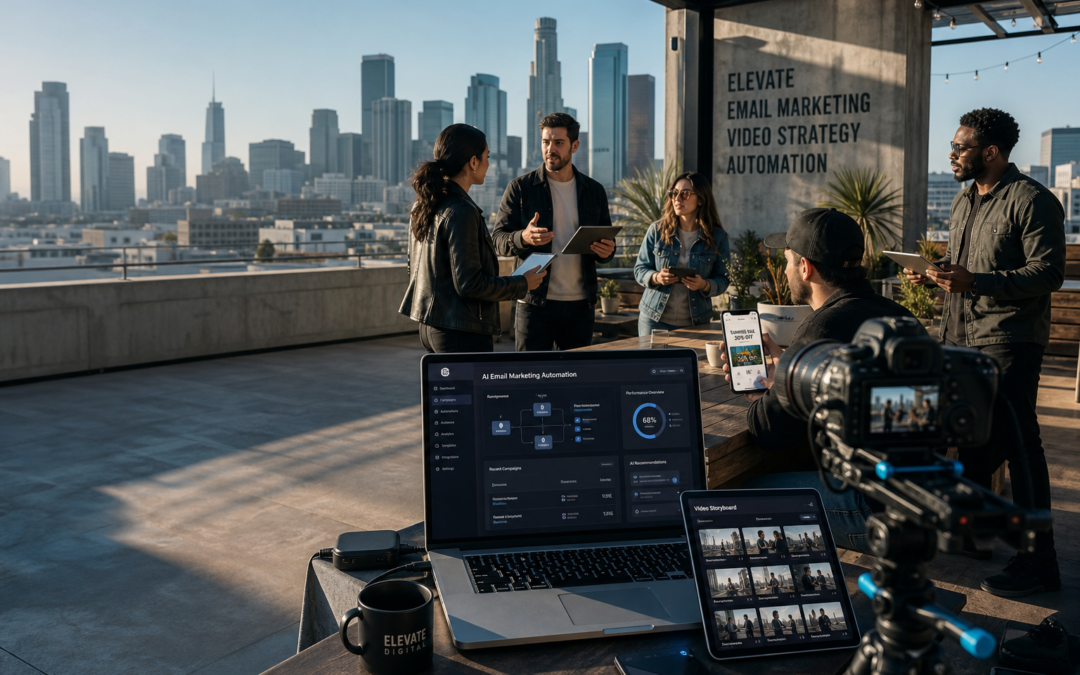
Email marketing automation in Los Angeles and California isn’t just evolving—it’s undergoing a structural shift. The difference now is that incremental tweaks and routine segmentation aren’t enough to cut through a fiercely competitive local market. Top-performing brands are building automation systems that connect hyper-specific audience signals (down to the neighborhood and device) with content that’s modular, visual, and compliance-driven from the ground up. Whether you’re running a boutique in Silver Lake or a chain of clinics across Southern California, your next wave of growth will come from blending real personalization, actionable analytics, and privacy-first processes—not from chasing “shiny object” features. This guide breaks down exactly how to future-proof your approach for 2026, with concrete examples, actionable frameworks, and the essential tools and metrics every LA marketer needs to track.
Key Takeaways
- AI-powered automation is pushing email marketers in LA to deliver true one-to-one messaging, dynamically crafted from live customer signals—basic localizing or list segmentation is no longer enough.
- Video inside automated emails now means delivering context-aware, personalized video assets triggered by user actions and integrated across platforms—not just embedding a generic clip.
- Google’s evolving Search profile and Discover features demand that email-driven actions are structured for maximum visibility, with a focus on schema markup and generating authentic reviews.
- Platform selection should prioritize integration with your stack, automated privacy workflows, and creative asset management—“feature checklists” don’t guarantee long-term fit.
- Neglecting preference management and compliance isn’t a minor miss: it can rapidly erode trust and introduce serious legal or deliverability risks in California’s regulatory climate.
What’s Actually Changing in Email Marketing Automation for Los Angeles in 2026?
Email automation in LA is being fundamentally redefined by a few key drivers: the integration of AI at every stage, the need for granular local targeting, and the rising bar for compliance and deliverability. It’s no longer enough to refresh your templates or layer on a new integration. For instance, a retail chain in Santa Monica might now use an automation platform that assembles entirely different messages for each subscriber—factoring in recent in-store visits, neighborhood-level events, device usage patterns, and even engagement with recent web or social campaigns.
The pace of change is driven by several factors: evolving privacy laws, shifts in how email clients and Google filter/display content, and consumer fatigue with recycled, generic messaging. Many LA marketers misattribute the challenge to “too many emails” or “declining open rates,” when the root cause is often misaligned automation—such as sending a mass offer to everyone downtown, missing the nuances of local interests or timing.
Rather than focusing on quantity, leaders are zeroing in on smarter automations that adapt message, timing, and channel to the individual. Imagine an independent Venice coffee shop using AI to trigger a loyalty offer only to subscribers who opened two recent emails, visited a mapped geofence, and haven’t purchased in 30 days—while suppressing those who just redeemed a coupon. This kind of micro-targeting, enabled by platforms like Iterable or Customer.io, is what’s raising the stakes in 2026.
For a step-by-step breakdown of what modern automation really means, see What Is Email Marketing Automation? A Plain-English 2026 Guide.
How Is AI Email Marketing Reshaping Personalization in California?
AI-driven personalization in California email marketing has moved far beyond first names and city tags. The leading systems now analyze dozens or even hundreds of data points—from device and location, to recent purchase signals, to inferred interests from Google and social feeds. Take a Venice fitness studio: its automation might send a subscriber a custom workout video, a nutrition tip, and a class invite, all tuned to the user’s age, goals, and last three interactions—without any manual setup for each combination.
Too often, marketers bolt on personalization as a late-stage add-on, missing the bigger opportunity. The real leap forward is in designing your entire campaign workflow around dynamic, AI-powered content blocks. For example, Iterable and Customer.io let you build emails that assemble themselves on the fly: choosing the right subject line, video, and offer from a modular library, based on real-time signals from your CRM and web analytics. If your system isn’t integrated tightly enough to pull in this context, your “personalized” emails will likely feel off-the-mark.
Avoiding the “one-size-fits-all” trap starts with your data quality: make sure your CRM, website analytics, and email automation are syncing in real time. For LA marketers, this often means connecting with platforms that can ingest local signals (like event RSVPs or in-store check-ins) and react instantly—rather than relying on weekly batch updates.
The impact of this approach is often visible in downstream metrics: higher open rates, improved click-to-open rates (CTOR), and a reduction in opt-outs or spam complaints. For a closer look at how real-time analytics can drive campaign results, see AI Data Analytics Trends Nationwide Brands Marketers Need to Know in 2026.
What Makes Video Marketing Automation the Next Big Leap?
Simply embedding a video in your email isn’t enough in 2026. Sophisticated LA marketers are using automation to serve up video that’s context-aware, personalized, and timed to trigger based on user behavior. For example, a real estate agency might send each lead a customized walk-through video, where the introduction is dynamically stitched to address that user’s name and desired neighborhood—automatically triggered as soon as the lead’s engagement score crosses a certain threshold. This level of automation is increasingly accessible with tools like Vidyard integrated into platforms like ActiveCampaign or Iterable.
What truly sets leaders apart is using video not just as content, but as an automation trigger and feedback loop. For instance, a Pasadena medspa could automatically send a testimonial video after a prospect opens three nurture emails but still hasn’t booked—and then follow up with a special offer if the video is watched to completion. Platforms like Litmus are key here, allowing marketers to preview and test video rendering across dozens of email clients before launch, ensuring that the user experience holds up everywhere.
Another overlooked tactic: integrating video engagement data (such as clicks, plays, or watches) directly into your automation rules. This lets you refine future content for higher relevance and helps drive up both open and click-to-open rates. For practical production advice, see AI Brand Video Production Cost in 2026: Real Pricing and for advanced video marketing tactics, the 2026 AI Brand Video Playbook for Aesthetic Clinics.
Checklist: Automating for Google Search Profiles and Discoverability
Google’s continued rollout of Search profile features and richer Discover snippets means email marketers in LA must structure their campaigns for both inbox and search visibility. It’s not just about SEO—automation workflows should support the generation of signals Google can surface, like recent reviews or event updates. Here’s how LA brands are adapting:
- Schema markup: Add schema.org markup (for events, products, reviews) to both your website landing pages and any email content that’s likely to be quoted or linked on the web. Many local businesses still miss this step, but it can help Google connect your automated campaigns to your public-facing profiles.
- Automated review generation: After a service or purchase, trigger a follow-up email personalized to the recipient, timed for peak satisfaction. This often results in a steady trickle of authentic Google reviews. For instance, a local restaurant might see its search visibility rise as happy customers share feedback post-visit.
- Search intent alignment: Use analytics to identify trending local queries, then dynamically update your email content blocks to address them. If “outdoor dining in Silver Lake” is spiking, highlight it for subscribers in that area.
- Google Business Profile (GBP) integration: Automate surveys or review requests after users interact with your GBP listing, and sync responses back to your CRM. Zapier and Make are useful for connecting these dots, especially for smaller teams without dedicated dev resources.
For a detailed look at how automation and local search intertwine, see Google Business Profile Optimization Trends US Marketers Need in 2026.
Framework: The C.A.V.A. Model for Smarter Email Automation in Los Angeles
The C.A.V.A. Model—Curate, Automate, Validate, Adapt—provides a practical, step-by-step structure for building resilient, effective email automation in the LA market. Here’s how to put it into action:
- Curate: Start by creating a centralized, well-organized content library. Tag each text block, image, and video by audience segment, customer intent, and stage in the journey. For example, a Glendale retailer might maintain testimonial videos, local event teasers, and product highlights—each tagged for use in onboarding, loyalty, or win-back sequences. Set up a regular review schedule to retire outdated content and upload new assets.
- Automate: Map out detailed customer journeys with clear triggers and branches. Use journey builders in platforms like Customer.io or Iterable to define what happens after every key action: opens, clicks, video plays, form fills, or cart abandonment. Don’t just rely on basic flows—customize sequences for real behaviors, such as sending a follow-up offer only if a subscriber in West LA clicks a video and visits a store within a week.
- Validate: Move beyond surface metrics. In addition to open rate (how many recipients opened your email) and click-to-open rate (CTOR, the percentage who clicked after opening), track deeper results like purchases, bookings, or reviews generated. Break down this data by segment (e.g., Eastside vs. Westside) and use A/B testing to continuously improve subject lines, content blocks, and send times. Platforms like Litmus or Email on Acid help automate rendering tests to catch display issues before launch. Don’t forget to monitor deliverability metrics using tools like Postmark or SendGrid: sudden drops in inbox placement or spikes in opt-outs can signal bigger problems.
- Adapt: Schedule quarterly workflow audits—review segment performance, retire underperforming automations, and refresh creative assets based on what’s working. In LA, trends change quickly; what resonates in winter may fall flat by summer. Assign responsibility for adaptation to a specific team member or rotate it so the process is never neglected. Build in the flexibility to add new data sources or creative formats as they become available.
By following the C.A.V.A. model, LA marketers can keep their automation systems agile, data-driven, and genuinely responsive to changing market realities.
Which Email Marketing Automation Platforms Actually Fit LA Marketers’ Needs?
With dozens of platforms vying for attention, LA marketers should evaluate tools based on integration, privacy automation, video/creative support, and deliverability—not just feature checklists. Here’s a comparison of leading contenders for 2026 (top LA picks highlighted):
| Platform | Best For | AI/Personalization | Video Support | Compliance Tools | Main Trade-Off |
|---|---|---|---|---|---|
| Iterable | Mid-large, multi-channel brands | Omnichannel AI, deep data integrations | Personalized video, advanced triggers | Enterprise-grade privacy controls | Complex setup, requires strong ops |
| ActiveCampaign | Growing SMBs | Predictive content, dynamic segments | Native video blocks, basic personalization | Solid, but setup-heavy | Steep learning curve for advanced features |
| Klaviyo | E-commerce, retail | Commerce-focused automation | Integrates with video platforms | Strong on opt-out/consent | Limited flexibility outside e-commerce |
| Mailchimp | Generalists, smaller teams | Mostly basic personalization | Video thumbnail support, limited automation | Simple, user-friendly | Limited custom workflows |
| HubSpot | B2B, service businesses | Advanced content recommendations, A/B | Native video, strong analytics | Robust (GDPR, CCPA, etc.) | Costs scale quickly |
| Customer.io | Product-led growth, SaaS | Behavioral targeting, flexible logic | Third-party video integration | Customizable privacy workflows | Requires technical resources |
For LA brands prioritizing advanced video automation and dynamic local content, Iterable and Customer.io are standouts, thanks to their real-time data integrations and support for modular, personalized campaigns. If compliance and deliverability are top concerns, platforms like HubSpot, Postmark, or SendGrid offer strong automated tools for privacy and inbox monitoring. Always verify that your platform provides robust reporting (including open rates, CTOR, and unsubscribe/churn metrics) and easy integration with your analytics stack.
How Do Video and Creative Trends Intersect with Email Automation?
LA leads the nation in visual brand trends, so your email automation must keep pace. Today’s subscribers expect not just images but immersive video and visually consistent creative across every touchpoint. For example, a multi-location restaurant group can use dynamic content to insert chef intro videos based on a subscriber’s location or dining habits—automatically pulled from a central asset library and updated as menus change.
This creative complexity makes asset management and review workflows critical. Without a clear process, it’s easy to send outdated or off-brand visuals, which can quickly undermine credibility and engagement. Platforms like Litmus help ensure that every creative asset renders correctly across email clients, while asset management features in Iterable or Customer.io streamline the review and approval process.
Visual consistency also has downstream benefits for brand trust and recall, especially in a market crowded with sophisticated local competitors. For a deeper dive on how design influences marketing automation, see Logo & Business Card Design Trends Los Angeles Marketers Need in 2026 and Logo & Business Card Design: The Complete Los Angeles Buyer’s Guide 2026.
What About Compliance, Privacy, and the Hidden Risks of Automation?
California’s privacy regulations (like CCPA) make compliance a moving target—and automation multiplies both risk and reward. Too often, LA businesses treat privacy as a “set-and-forget” checkbox, but a single misstep (such as emailing users who have opted out, or failing to honor data deletion requests) can lead to lost trust or real legal jeopardy.
Consider a West LA fitness studio: if their automation isn’t syncing unsubscribes in real time, a re-engagement campaign could easily reach people who previously opted out—opening the door to complaints or even fines. To avoid this, always automate opt-out processing, consent tracking, and regular compliance audits. Invest in platforms with built-in privacy features (like HubSpot or Iterable) and supplement with deliverability monitoring tools such as Postmark, SendGrid, or Mailgun to catch suspicious sending patterns and opt-out anomalies before they become a problem.
Metrics matter here, too: monitor opt-out rates, complaint rates, and inbox placement as closely as open/click metrics. For a broader view on automation risks and business value, see The Business Case for Email Marketing Automation in California.
Which Email Automation Tactics Are Actually Working for LA Businesses?
Concrete, locally relevant automation tactics are what set LA’s leading campaigns apart. Here are three proven approaches:
- Localized Event Triggers: An LA music venue uses geo-targeted automation to invite subscribers to shows near their neighborhood, pulling in recent event video clips. Engagement tends to climb, not just because of the tech, but because the messaging feels timely and specific to each recipient.
- Post-Purchase Video Follow-Ups: A West Hollywood beauty retailer sends custom video tutorials after a first purchase, tailored to the specific product and addressing the customer by name. The sequence includes a Google review prompt, which often results in both higher satisfaction and greater online visibility.
- Automated Preference Centers: A Pasadena nonprofit builds a dynamic preference center, allowing donors to select which causes and updates interest them. That data flows directly into automation rules, ensuring subscribers receive only content they care about, helping reduce unsubscribes and increase engagement.
The common thread: automation is most effective when paired with locally relevant content and ongoing testing—not as a “fire and forget” solution.
How Should California Brands Future-Proof Their Email Automation?
To stay ahead in Southern California, brands need systems designed for change—not just for today’s trends. Your automation stack should be ready for new content formats (like interactive video), evolving privacy rules, and fast-moving shifts in consumer preferences. Just as important: your internal processes must support regular audits, skill development, and a culture of constant experimentation.
Rather than chasing the newest platform every year, focus on building resilient workflows. Audit your automation quarterly, cross-train your team, and make sure your email stack integrates smoothly with e-commerce, CRM, and even offline channels like flyer and printing services. The most successful LA campaigns now blur the line between digital and physical touchpoints, using data from every channel to drive smarter automation.
While this guide is brand-neutral, it’s clear that demand is rising for partners who can architect these interconnected systems—spanning email, web, video, and social—rather than simply running isolated campaigns. (For a deeper look at vendor selection strategies, see What Is Email Marketing Automation? A Plain-English 2026 Guide.) Lion Click Media remains an active observer and contributor to these trends, but the practices above apply regardless of provider.
Frequently Asked Questions
What makes email marketing automation different in Los Angeles compared to other markets?
Los Angeles’s diverse, competitive market and high digital saturation demand more sophisticated personalization and rich media like video to capture attention, making automation strategies here more advanced than in less crowded areas.
How can small California businesses afford AI-powered video email automation?
Many AI-assisted video tools offer scalable pricing and templates, enabling small businesses to create engaging video content without large budgets, especially when integrated smartly within email automation platforms.
Does Google’s Search profile update affect email list building strategies?
Yes, the update lowers subscriber requirements and streamlines login, making it easier for email-driven subscriber growth to enhance Google profile visibility, encouraging closer alignment between email campaigns and SEO.
How do privacy laws like CCPA impact email automation tactics?
California privacy laws require explicit consent and transparency, so email automation must include compliant opt-in flows, easy opt-outs, and careful data handling to avoid legal risks and build subscriber trust.
What types of videos work best inside automated emails?
Short, focused videos like product demos, customer testimonials, event highlights, or personalized messages perform best as they respect attention spans and deliver clear calls to action within automated sequences.
How often should marketers update their email automation workflows in 2026?
Regular reviews every quarter are recommended to refine segmentation, refresh creative assets like videos, and adjust triggers based on evolving subscriber behavior and market conditions.
Can video-driven email automation reduce subscriber fatigue?
Yes, by delivering dynamic, engaging content tailored to interests, video can keep emails fresh and relevant, which helps reduce unsubscribe rates and maintains audience enthusiasm.
Get Your Free AI Marketing Audit
See exactly where you are leaving leads on the table and how Lion Click Media can help you rank higher, capture more customers, and Make Your Brand ROAR. No cost, no obligation.
Claim My Free Audit →Or chat with our 24/7 AI assistant (bottom-right) for instant answers.