
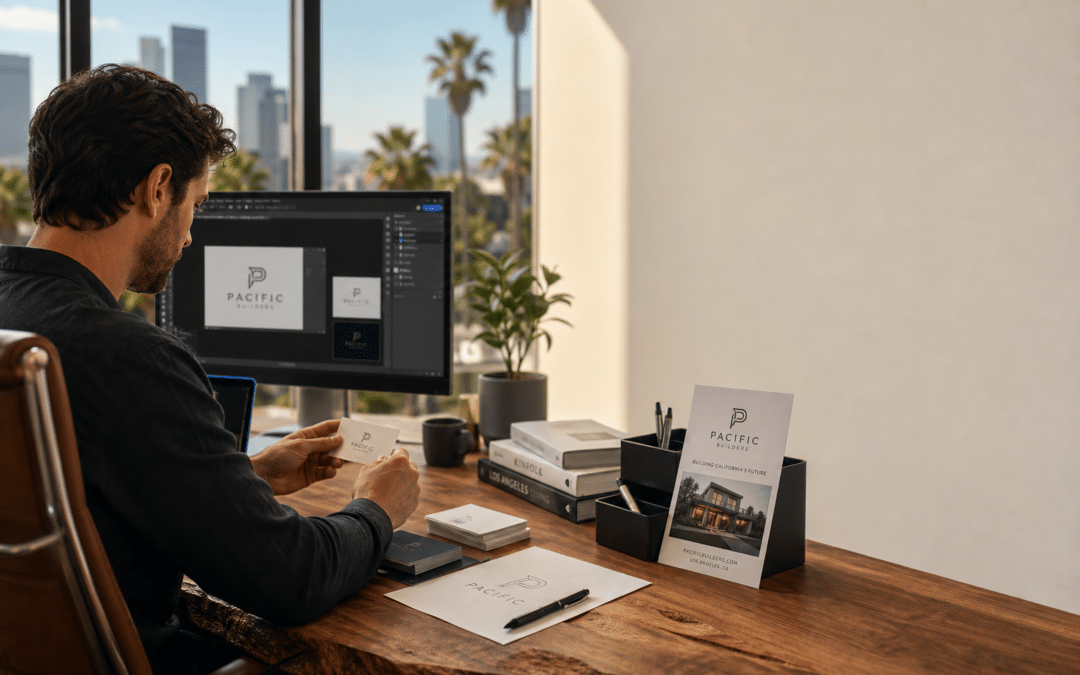
For California businesses, logo and business card design is not just about looking sharp—it’s about building a brand that stands out, survives trend cycles, and actually wins local customers. The most effective visual identities combine clarity, memorability, and practical usability, whether you’re a Venice startup or scaling statewide. This guide cuts through shiny trends to show you how to make strategic, lasting design choices for 2026 and beyond—backed by real California scenarios and the latest facts on AI’s impact.
Key Takeaways
- Great logo and business card design in California requires balancing creative flair with concrete local market strategy—what works in LA may flop in Fresno.
- AI tools are now a major influence in design: 38% of business web content already involves AI assistance by 2026 (Presenc AI), but they’re only as effective as the human vision guiding them.
- Most businesses underinvest in foundational brand identity, confusing speed or low cost with long-term differentiation—which leads to forgettable, lookalike brands.
- Local print and digital needs vary wildly: a logo that pops on a Hollywood billboard can become illegible on a business card or app icon.
- There’s no universal “right” process—your workflow, designer, and tools must fit your industry, scale, and market, not just follow the latest design fad.
Why Most Logo & Business Card Designs Fall Short in California
Los Angeles alone births thousands of new businesses each year, but most blend into the background—usually because they prioritize what looks cool over what’s actually memorable or strategic. The most common failure? Settling for a trendy or clever logo that means nothing to real customers. For example, a West Hollywood fitness studio might debut with a slick geometric mark, but if it doesn’t connect to wellness or inspire trust, it’s just another shape in a sea of brands.
Business cards, meanwhile, often get treated like an afterthought—especially in tech-driven cities like LA or San Jose, where digital seems to rule. Yet in-person networking and local events still drive referrals. A fresh UCLA grad at a Westside mixer is far more likely to remember the insurance agent with a distinctive, tactile card than someone who just flashes a QR code. The best results come from integrating your digital and print touchpoints—using the same logo, color, and tone—so people recognize you everywhere.
The “fast and cheap” trap is real: DIY logos or template cards might look fine on screen, but falter on a car wrap, storefront, or ad. Those shortcuts nearly always lead to wasted money and future rebrands when you realize your assets don’t scale or stand out. Thoughtful investment up front prevents the headache of redesigning everything as your business grows.
What Should a Modern California Logo Actually Do?
A logo is not just art—it’s a business tool built for recall, differentiation, and versatility. In Los Angeles, where trends change fast and competition is fierce, the best logos are instantly recognizable, flexible across all uses, and anchored in what makes your business unique. For instance, Sweet Lady Jane Bakery’s simple wordmark works on everything: cakes, bags, and Instagram, while a busy, detailed logo would muddle their brand.
Originality is overrated if it sacrifices clarity. Consider how dozens of LA coffee shops use abstract symbols, but the ones that last—like Alfred Coffee’s clean cup icon—are simple enough for a child to sketch from memory. In crowded niches (think: real estate or fitness), your logo’s job is to plant a mental flag. Don’t chase design awards—chase memorability and strategic fit.
One overlooked consideration: future-proofing. Imagine a Pasadena bakery that might expand into catering or events—if they lock into a cupcake mascot, they risk boxing themselves in. Instead, a flexible symbol (like a stylized cake stand or monogram) leaves room to grow. The best California logos are built to evolve with your business, not just your launch moment.
How AI Is (and Isn’t) Changing Logo & Business Card Design in 2026
AI design tools are now mainstream in California’s creative industries. According to Presenc AI, 38% of business web content in 2026 involves AI assistance—nearly triple from just two years prior. Designers routinely use AI for brainstorming, mood boarding, and generating fast concept drafts.
But here’s what most businesses get wrong: AI is only as valuable as your brief and your judgment. Generative tools like Looka or Adobe Firefly can pump out endless logo variations, but without a clear brand strategy, you’ll just get a parade of lookalike marks. With 83% of content marketing teams using AI by 2025 (AdAI), your competitors have access to the same automation. The real advantage comes from knowing how to direct, filter, and refine what AI produces.
There’s also a real risk of over-automation. Nearly three-quarters of new web pages contain some AI-generated content, but only a tiny fraction are fully AI-made (The Stacc). The lesson for design: treat AI as a draft partner, not a decision-maker. In California, where cultural nuance and local context matter, human oversight is essential to avoid generic, soulless branding.
The Four Pillars: The C.L.E.A.R. Framework for Standout Local Branding
Most owners jump straight to colors or fonts, but lasting brands are built on structure. The C.L.E.A.R. Framework ensures your visual identity serves your business—not just your designer’s portfolio. Here’s how to use each step in practice:
- Client Profile: Go beyond demographics. Interview real customers—ask what they remember about your service, what signals trust, and which competitor cards/logos they’ve kept or tossed. For example, a Venice fitness studio found its clients valued a calming, minimal logo over aggressive graphics.
- Local Context: Audit your market’s look. Walk your business district or browse the websites of your top 10 local competitors. Note which logos blend in and which stand out—avoid the overused motifs (like palm trees for LA, waves for Santa Monica) unless you have a fresh twist.
- End-Use Scenarios: Print your draft logo at business card size, overlay it as an app icon, and hold it up outside your storefront. The real test: does it stay legible and distinct everywhere it’ll appear? Many logos that look great on a monitor fail on real-world materials.
- Authenticity Filter: Gut-check your design—does it feel like your business, or could it belong to anyone in your niche? Swap your logo onto a competitor’s card; if it still fits, you need to dig deeper. Authenticity is the fastest way to stand out in a saturated city.
- Real-World Feedback: Before finalizing, show your options to actual target customers—at a Chamber of Commerce event, in your shop, or via a quick Instagram poll aimed at locals. Pay attention to which option people remember unprompted a day later.
Each pillar protects against the two biggest risks: blending in and building a brand that can’t scale. Too many California businesses skip the hard work of research, then wonder why their branding feels flat six months later.
DIY, Freelancer, or Agency: Which Route Fits Your Business?
Choosing how to approach logo and business card design can feel overwhelming in Southern California, where options range from $20 template sites to high-end agencies. The right choice depends on your business stage, industry, and appetite for creative risk versus strategic depth.
The table below compares the main routes California businesses actually use:
| Option | Best For | Pros | Cons | What Most Miss |
|---|---|---|---|---|
| DIY Tools (e.g. Canva, Looka) | Solopreneurs, side hustles | Fast, affordable, lots of templates | Risk of generic results, limited customization | Often looks out-of-place on print materials; legal trademark risks |
| Freelance Designer | Growing small businesses, local pros | Custom work, direct collaboration | Quality varies, requires design-savvy client | Many skip real market research, leading to unoriginal results |
| Design Agency | Established brands, multi-location operations | Strategy-driven, scalable assets, full service | Higher cost, slower turnaround | Not all agencies understand local nuances—insist on LA/California experience |
| AI-Driven Services | Budget-conscious, tech-forward businesses | Rapid drafts, low cost, endless variations | Weak on originality, needs strong human direction | Overreliance on AI can lead to lookalike brands unless you tweak outputs |
The main insight: the best route depends on your willingness to take creative risks and how much strategic support you need. For a cost breakdown, see this guide on real logo design pricing in 2026.
What Makes a Business Card Unforgettable—And What Most Get Wrong
Business cards are still alive and well in California, but most end up in the recycling bin for the same reason: they try to do too much. Overcrowding—stuffing every contact method, tagline, and QR code onto a tiny card—kills memorability. In practice, the cards that actually get callbacks usually have one or two strong, distinctive elements and a clear call to action.
Here’s a real-world tactic: in LA, cards with a bold, simple mark and a textured finish (like soft-touch or raised ink) tend to stick around longer in wallets. A Santa Monica wellness coach who switched from a busy, full-photo card to a minimalist design with a colored edge noticed more prospects mentioning her card at follow-ups. The tactile feel and simplicity make it stand out among a pile of glossy, templated cards.
- Trim the Noise: Limit info to name, title, direct contact, and one brand element (logo, tagline, or QR code).
- Prioritize Readability: Test your card at arm’s length—if anything blurs, it’s too small or busy.
- Invest in Texture: Consider premium stocks, embossing, or spot UV to make your card feel as good as it looks.
- Match Your Market: A playful design might soar for a Venice Beach surf shop but flop for a Pasadena law firm. Tailor design to your industry and audience.
- Print Locally When Possible: California printers often deliver faster turnaround and better color accuracy for regional branding needs.
If you run a service business, compare these tips with the print marketing and flyer costs in 2026 guide for broader print strategy ideas.
How to Vet a Los Angeles Logo Designer: Beyond Portfolios
Too many business owners hire based on portfolios alone—then feel burned when the work looks great but doesn’t deliver business results. True due diligence means looking for designers or agencies that connect your business goals to visual language. Ask for case studies where their design actually solved a problem—like improving walk-in recognition or clarifying a confusing service lineup.
Quiz potential designers on their research process. Do they interview your target customers, or just send you a mood board? Do they test concepts in real-world formats, or only show digital mockups? A serious designer should explain how they handle California-specific challenges—like bilingual signage, ADA compliance for visibility, or hyper-local references. If you’re in finance or any regulated field, compare their process to the best practices outlined in brand identity design for financial advisors.
Finally, nail down deliverables and rights: demand vector logos (for scalability), print-ready card files, and clear ownership of copyright and trademark permissions. Too many brands skip this, then get stuck during future expansions or legal disputes.
Integrating AI Content and Design: The Real-World Workflow
AI content creation now sits at the heart of brand identity design—especially in tech-forward California, where up to 92% of creators use generative AI in some capacity by 2026 (Presenc AI). But using these tools well is about collaboration, not autopilot.
Here’s a proven workflow for small and mid-size businesses:
- Start with Human Strategy: Clearly define your core brand message and audience. Use AI tools like Looka or Adobe Firefly to brainstorm visual directions (logo sketches, font combos, color palettes) based on your real business goals.
- Rapid Prototyping: Generate multiple concepts quickly—AI can produce a week’s worth of drafts in a day. But treat these only as starting points, never finished work.
- Human Curation: Shortlist outputs that truly reflect your client profile and local context. Edit or discard anything that feels generic or off-brand, using real customer feedback for guidance.
- Final Polish by a Designer: Hand off the best AI-generated drafts to a professional for refinement, vectorization, and preparation of print-ready and digital files. Human attention to detail is what separates amateur from pro branding.
- Feedback Loop: Test finished assets with actual customers—in person, on your website, and in print—before launch. Adjust based on what gets noticed and remembered.
If you’re just starting with AI in marketing, check out the 2026 AI marketing guide for Newport Beach or learn about AI content rules for Google to avoid common missteps.
Branding for Local Impact: Los Angeles and Beyond
Winning local branding in California means more than clever graphics—it requires resonance. The best work weaves in subtle nods to local culture, history, or landmarks without slipping into cliché. For example, a Long Beach construction firm using geometric shapes inspired by local Art Deco buildings—and printing cards on heavy, textured stock to echo their work’s durability—anchors their identity firmly in the community. This kind of thoughtful integration builds word-of-mouth and sets you apart, especially in industries like real estate (see the comparison in DIY branding for real estate).
The biggest mistake? Importing trends from other markets or overusing generic online templates. California’s diversity is a strength—design for your neighborhood’s real aesthetic, and your brand will last longer than any trend cycle.
Printing, File Prep, and Launch: Avoiding the Last-Mile Mistakes
A strong design can still flop if poorly executed—a common pitfall in California’s fast-moving business scene. The most frequent mistakes are muddled files, off-color prints, and breakdowns in communication with printers. For business cards, always confirm your printer’s bleed, file type, and finish specs up front. Insist on print proofs before the full run, and don’t assume your designer has handled everything.
For digital and print consistency, keep all versions of your logo—AI, EPS, SVG, PNG, PDF, color, black-and-white, and reversed—in a locked folder. Too many brands end up off-brand because they rely on a single JPEG from years ago. This discipline saves major time and money when it’s time to update signage, run ads, or reprint collateral.
Premium finishes like foil, spot UV, or raised ink can make your card unforgettable—but they add cost and complexity. For statewide brands or those hitting big events, consider ordering two tiers of cards: a basic run for mass handouts and a premium batch for key meetings. For broader campaign planning, see print marketing for Orange County med spas for workflow and vendor tips.
When to Refresh: Signs Your Brand Identity Is Holding You Back
Knowing when to update your logo and business card design isn’t always obvious. Some California companies cling to dated marks out of nostalgia, while others rebrand so often they lose recognition. Clear signals it’s time: your logo no longer matches your service mix, your card gets blank stares at events, or you’re embarrassed to send prospects your branding.
Another overlooked trigger: expanding online. Assets designed for print often fall apart as app icons, email signatures, or social avatars. For multi-location brands, a periodic audit every few years helps ensure your materials reflect where you are today—not where you were at launch.
Not sure where to start? A quick outside audit or design review can surface gaps you’ve missed. For honest cost ranges, check the 2026 business logo and identity pricing guide.
Conclusion: Build for Longevity, Not Just Looks
Logo and business card design is an investment, not just a line item—done right, it secures real memorability and credibility in California’s crowded markets. The strongest brands respect both strategy and execution: they define their audience, understand local context, use AI tools with discernment, and never skip last-mile details like file prep and print proofing. Templates and automation offer speed, but lasting impact comes from treating your visual identity as a living asset—revisited and refined as your business grows.
For those ready to level up, aligning your process with the C.L.E.A.R. Framework can mean the difference between a forgettable card and a brand that opens doors statewide. If you want an expert’s eye, firms like Lion Click Media can help—but the smartest path always starts with a sharp understanding of your own market and audience.
Frequently Asked Questions
How much should a small Los Angeles business budget for logo and business card design?
Budget varies widely, but many small businesses in Southern California allocate funds in the low-to-mid four figures for quality design and printing. Prioritize clarity and consistency over flashy extras.
Can AI tools create logos as good as human designers?
AI tools can generate solid logo concepts quickly and help with messaging, but human creative oversight is essential to ensure uniqueness and cultural fit, especially in diverse markets like California.
Are business cards still relevant in the digital age?
Yes, particularly in networking-heavy cities like Los Angeles. Physical cards paired with digital tools like QR codes and AI chat assistants create powerful hybrid engagement opportunities.
What printing options work best for California climates?
Matte finishes and thicker cardstock resist glare and wear better under bright sunlight common in Southern California, ensuring your cards look sharp longer.
How do I ensure my logo complies with trademark laws in California?
Conduct thorough trademark and domain name searches early in the design process or engage legal counsel to avoid costly rebranding later.
Should I update my business cards if I redesign my website?
Absolutely. Consistent branding across all channels, including physical collateral, reinforces your professional image and improves recall.
What advantages does AI content creation provide for local branding?
AI content creation delivers consistent, optimized messaging at scale, helping California businesses maintain a unified voice across digital and physical assets while saving time and resources.
Get Your Free AI Marketing Audit
See exactly where you are leaving leads on the table and how Lion Click Media can help you rank higher, capture more customers, and Make Your Brand ROAR. No cost, no obligation.
Claim My Free Audit →Or chat with our 24/7 AI assistant (bottom-right) for instant answers.