
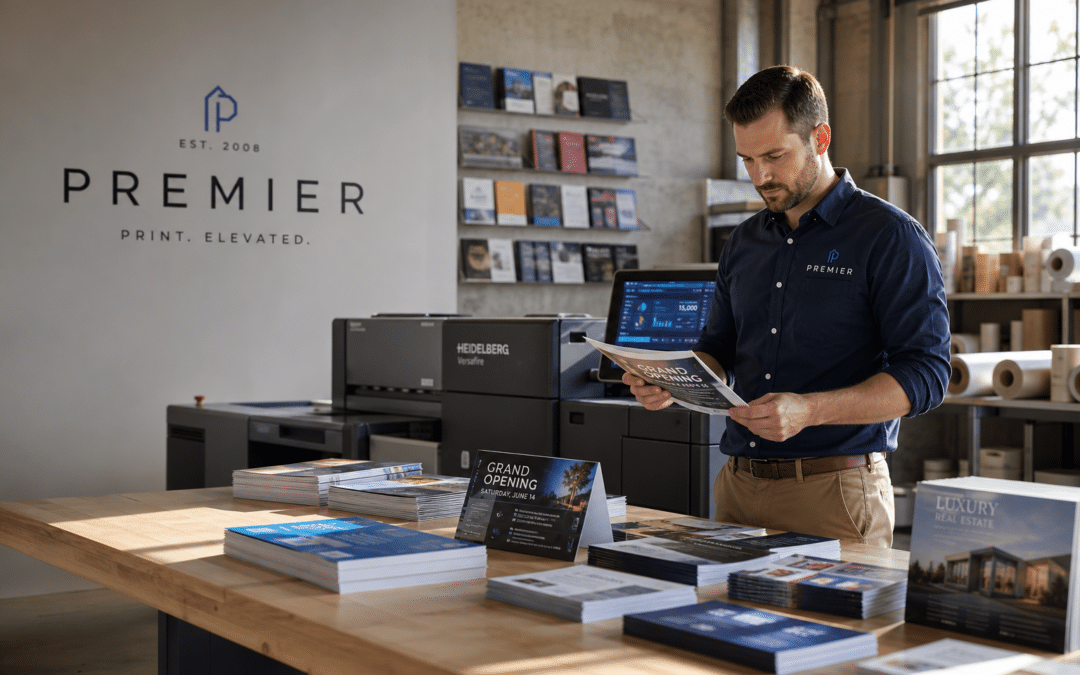
Flyer & printing services are far from obsolete — for U.S. businesses, they’re a proven channel for reaching real people, creating lasting brand impressions, and driving measurable results, especially when digital alone falls flat. But most companies still treat print as an afterthought, missing the strategic moves that actually generate ROI. If you want print to pull its weight, treat it as a deliberate, data-driven tool — not a relic, not a box to check, and definitely not a one-size-fits-all “blast.”
Key Takeaways
- Print marketing is not dying: the U.S. commercial printing market reached $126.99 billion in 2024 and continues to grow (Research and Markets).
- When campaigns use precise targeting, creative distribution, and smart tracking, flyers consistently outperform digital-only efforts for recall, trust, and local response.
- Most ROI gets left on the table due to vague targeting, lack of attribution, and poor integration between print and digital channels.
- The best results come from treating flyer & printing services as a force multiplier — not a silo or last resort.
- Emerging print tech, like digital variable data printing and QR-driven attribution, lets even small businesses run highly personalized, trackable campaigns.
Why Print Marketing Still Matters Nationwide — and What Most Miss
Ignore the tired myth that print is fading: the U.S. commercial printing market hit $126.99 billion in 2024 and is projected to reach $150.50 billion by 2030 (Research and Markets). Print is not nostalgia; it’s a living channel that delivers real-world engagement digital can’t touch.
What most businesses get wrong? Treating print as a “last-ditch” tactic or a one-off project, instead of a strategic lever. Print stands out because it’s physical, persistent, and refreshingly uncluttered compared to digital inboxes. A well-designed flyer or postcard doesn’t just get a passing glance — it can be pinned to a fridge, passed to a neighbor, or revisited days later.
Consider an independent dental clinic. Instead of blasting the entire ZIP code, they use existing patient data to target high-probability lapsed clients with a personalized postcard (including a unique offer code and a QR link to book online). They then retarget that same audience with digital ads. The result? Brand recall and appointment rates climb — not because of print alone, but because they orchestrated every touch as part of a bigger strategy.
How Flyer & Printing Services Drive Marketing ROI — Beyond the Usual Pitch
Most print campaigns are measured by direct redemption — but that’s a narrow view. Print’s true impact is broader: it creates local authority and trust, and it prompts word-of-mouth in a way digital rarely matches. A 2025 study in the International Journal of Research in Marketing found that optimized store flyers can yield 13% higher revenues and are more thematic than actual ones (ScienceDirect). The lesson: generic blasts don’t cut it; “thematic,” on-brand creative and smart sequencing matter.
Too many businesses fail to track the indirect impact of print. For example, a fitness studio may see increased web traffic and walk-ins after a flyer drop, but only count coupon returns. To close this gap, use custom URLs, QR codes, or unique phone numbers on every print piece — and reconcile those with your CRM and analytics tools for real multi-touch attribution.
If you’re comparing print vs. digital ROI, remember: digital can be paused or A/B tested instantly, but print lingers — it drives action days or even weeks later. For a closer look at how print ROI plays out in the field, scan through real ROI case studies for HVAC and local trades — you’ll see how integrated campaigns deliver more than the sum of their parts.
Direct Mail Marketing: Where It Wins, Where It Falls Short
Direct mail slices through digital clutter, especially for local or event-driven promotions. But it’s not about “spray and pray.” The businesses that win with direct mail invest in precise list targeting, creative variation, and post-campaign follow-up — not just in print and postage.
A classic misstep: blanketing an entire ZIP code without considering demographics or buying history. Imagine a children’s dentist sending the same postcard to college students and families with toddlers — half your spend is wasted. A smarter approach leverages tools like USPS Every Door Direct Mail (EDDM), commercial list providers, or even CRM export data to segment and tailor your message.
- Case Example: A Midwest pet supply store used a direct mail campaign featuring a personalized coupon and pet adoption event details. They included a QR code to an RSVP page and tracked both code redemptions and online signups. Over the next month, in-store traffic and web engagement rose steadily — not just from coupon users, but also from pet owners sharing event info with friends. The insight: multi-channel attribution and personalized creative unlock the real value of print.
Direct mail’s biggest shortcoming? It costs more per impression than email or social, and results hinge on timing, creative, and offer fit. The solution: pair direct mail with digital follow-up (targeted emails, SMS reminders, or retargeted ads) to extend your campaign’s reach and reinforce your message. If you’re weighing costs, see this real-world guide to flyer design and printing costs for honest breakdowns and decision factors.
Print vs Digital Marketing: What Actually Drives Results?
The “print vs digital” debate is a red herring. The highest-performing U.S. businesses use both, playing to each channel’s strengths. Print is unbeatable for trust and brand memory; digital wins for speed, targeting, and easy measurement.
Here’s a practical side-by-side comparison:
| Channel | Best Use Cases | Strengths | Limitations |
|---|---|---|---|
| Flyer & Printing Services | Grand openings, local event promotion, reactivating lapsed customers | Tangible, memorable, less digital clutter, high local trust | Longer turnaround; attribution needs planning |
| Digital Ads (Social, Search) | Last-minute offers, broad reach, rapid A/B testing, retargeting | Immediate data, granular targeting, easy iteration | Short attention span, crowded channels, ad fatigue |
| Email Marketing | Customer retention, nurturing, segmented updates | Low cost, measurable, scalable | Spam filters, easy to ignore, list fatigue |
| Direct Mail Marketing | Personalized reminders, exclusive offers, loyalty programs | Physical presence, personalization, high open rates | Higher per-piece cost, complex fulfillment |
The less-obvious truth: you don’t have to pick one. The best campaigns use print and digital as force multipliers. For example, a flyer can drive users to a tracked landing page powered by AI-driven analytics, while digital ads retarget visitors who interacted with your print offer — creating a full-funnel, multi-touch lift that standalone channels can’t match.
What Are the Smartest Flyer Distribution Strategies Today?
Design matters, but distribution makes or breaks most flyer campaigns. The businesses that win don’t rely on “everyone gets one” — they use data and process to put the right flyer in the right hands at the right moment, with a clear call to action and a frictionless next step.
Here’s a step-by-step checklist for flyer distribution in 2026:
- Audience Targeting: Map your best customers using real purchase or CRM data. Don’t default to a wide ZIP code sweep; segment for relevance and likely buyers.
- Distribution Method: Choose the right channel for your goal. Direct mail is best for targeting addresses; door-to-door works for hyperlocal saturation; in-store handouts suit retail; event placement works for B2B. National brands can partner with local businesses for co-branded drops.
- Timing: Match distribution to seasonality and buyer behavior. For example, a landscaping service sends flyers just before spring, while a med spa aligns with back-to-school or holiday periods. See this guide to print marketing for med spas for strategies that apply nationwide.
- Tracking & Attribution: Every flyer should include a unique QR code, offer code, or custom URL, linked to your CRM or analytics platform. Tools like Google Analytics, HubSpot, or CallRail make tracking print-to-digital conversions straightforward.
- Follow-up: Reinforce print with a digital touch — email, SMS, or retargeted ads — to boost recall and conversions. Coordinate timing so digital hits as soon as print lands.
The most common failure? Failing to sync print drops with digital campaigns, which splits your impact. Tight coordination between channels is what separates the pros from the pack.
Integrating Print with Digital: The R.O.A.R. Method for U.S. Businesses
To maximize marketing ROI from flyer & printing services, you need a repeatable process for blending print and digital — not random acts of marketing. The R.O.A.R. Method (Reach, Optimize, Activate, Reinforce) is one such workflow used by high-performing teams:
- Reach: Define your audience using current customer data, then select the best delivery channel (direct mail, handouts, event placement). Use tools like USPS EDDM, list brokers, or your own CRM to target precisely.
- Optimize: Design flyers or postcards with one clear, benefit-driven call-to-action. If possible, test creative — some digital printers now offer affordable short runs for real-world A/B testing. Borrow from digital best practices: high-contrast headlines, simple layouts, and clear next steps.
- Activate: Make it as easy as possible for recipients to respond. Use QR codes, unique URLs, or text-back offers that connect directly to a mobile-friendly landing page or booking form. This is where tools like CallRail (for unique phone tracking) or Google Analytics (for custom UTM links) pay off.
- Reinforce: Don’t stop at the first touch. Use email or SMS follow-ups, retargeting ads, or even direct calls based on print response data. For example, everyone who scans your flyer’s QR code can be added to a digital nurture campaign for ongoing engagement. If your landing page collects emails, sync those directly to your CRM for further marketing automation — see website management services for integrating digital lead capture with your print campaigns.
Most businesses skip “Reinforce” and end up with one-off results. The real multiplier comes from persistent, coordinated follow-up across channels.
Real-World Scenarios: When Print Outperforms Digital (and Vice Versa)
Knowing when to use print, digital, or both is key to spending wisely. Here are three real-world scenarios:
Scenario 1: Local Grand Opening
A new restaurant in a mid-sized U.S. city launches with a flyer drop to nearby homes offering “bring this flyer for a free appetizer.” The flyer ends up on fridges and gets brought in for weeks, driving steady foot traffic. Digital ads run at the same time, but most redemptions are physical flyers — showing that for hyper-local, event-driven launches, print is often the foot-in-the-door.
Scenario 2: E-Commerce Expansion
A national retailer entering a new market combines direct mail catalogs with digital retargeting and unique online codes. Print builds awareness and first purchases; digital captures repeat buyers. For more on how leading U.S. brands orchestrate this mix, see how top companies accelerate growth with e-commerce.
Scenario 3: Service-Based Business Reactivation
A home services provider targets lapsed clients with a personalized postcard and a matching email offer. Customers who see both are far likelier to return than those who get just one touch. The takeaway: multi-channel reinforcement is the single most overlooked driver of ROI in local services.
Print isn’t a replacement for digital — it’s the amplifier. Used right, it moves people to act when digital alone can’t.
Understanding Costs and Trade-Offs in Print Marketing
The first question most business owners ask: “Is print worth the cost?” The honest answer: costs vary widely — print quality, quantity, creative complexity, and distribution method all play a role. Many local businesses spend somewhere in the low-to-mid four figures per month for recurring campaigns, but actual spend depends on your market and ambition.
The real trade-off is lead time and upfront investment versus staying power. Print campaigns require more planning and cash up front than digital, but their results last longer — a great flyer can drive repeat visits for weeks or months. Tight budgets or unpredictable demand may make digital feel safer, but for established brands or new locations, print’s tangible impact often justifies the spend. For a breakdown of what factors drive flyer costs, see this detailed guide to print marketing costs.
One warning: print does not forgive sloppy execution. Weak design, confusing messaging, or irrelevant offers will kill your ROI. Invest in professional creative — see logo and business card design services for cohesive branding — and use quality paper stocks that reflect your brand’s value. Cutting corners here is a false economy.
Emerging Trends: Print Technology and U.S. Market Dynamics
Print marketing is evolving rapidly — new technology is making flyer & printing services more data-driven, personalized, and accessible than ever. The U.S. digital printing market hit $7,735.1 million in 2025 and is projected to reach $9,854.8 million by 2034 (IMARC Group). For small businesses, this means short runs, variable data printing, and hyper-targeted creative are now practical — you can print 250 custom flyers instead of thousands of generic ones.
Packaging and flexographic printing are also surging. The U.S. packaging printing market is expected to approach $98.6 billion by 2033 (Grand View Research), and flexographic printing is growing at nearly 5% CAGR (Grand View Research). For product brands, your packaging can now double as a marketing channel — think QR codes on boxes for instant digital engagement.
Even service businesses can use new print tech: flyers with NFC tags, augmented reality overlays, or QR codes that trigger video walkthroughs or instant booking. For ideas on integrating video and interactive content, see practical video creation strategies that pair well with print campaigns.
Choosing the Right Print Partner: What Actually Matters
Selecting a flyer & printing services provider isn’t just about price — it’s about finding a partner who gets your strategy, audience, and brand. Treating print as a commodity is a recipe for wasted spend and underwhelming results.
Key criteria to evaluate:
- Design Support: Do they offer skilled design, or just templates?
- Print Technology: Can they handle variable data, short runs, or specialty finishes like UV coating?
- Distribution Capabilities: Will they help with direct mail, drop-shipping, or in-store placement?
- Tracking & Reporting: Do they set up QR codes, custom URLs, or call tracking for attribution?
- Industry Experience: Have they executed campaigns for businesses like yours, especially in regulated sectors?
Ask to see real campaign samples and get references. If you’re in a regulated industry, make sure your provider understands HIPAA, FINRA, or other compliance needs. For a clinic-specific checklist, see this guide to choosing a print marketing agency for clinics.
For businesses in Orange County, CA, Lion Click Media is one example of a local provider that fuses print, digital, and creative — but the same selection criteria apply wherever you’re based.
Putting It All Together: The Future of Print Marketing ROI
The U.S. print industry’s growth — across commercial, digital, and packaging segments — proves flyer & printing services are evolving, not fading (Research and Markets). The businesses that see the strongest ROI are those who treat print as a strategic, integrated part of their marketing — not a throwback or afterthought.
To make print work, double down on three things: precise targeting, compelling creative, and seamless integration with your digital channels. The businesses who nail these fundamentals — and use real attribution tools to measure results — will keep winning, no matter how digital marketing evolves.
Print’s deepest value isn’t just in quick response rates or one-off sales. It’s the trust, brand memory, and persistent “real-world” presence it creates — advantages that, honestly measured, are tough to match with digital alone. For businesses ready to rethink flyer & printing services as a modern, data-driven tool, the upside is still substantial.
Frequently Asked Questions
Are flyer & printing services effective for online-only businesses?
Flyer & printing services typically have limited impact for online-only businesses unless used to target local events or specific geographic promotions. They shine best where physical presence drives sales.
How do I measure the ROI of a flyer campaign?
Track ROI by using unique promo codes or QR codes on flyers linked to sales or inquiries, combined with CRM data to monitor lead conversion and customer acquisition costs.
What paper quality should I choose for a flyer?
Choose a sturdy, glossy paper to convey quality and professionalism, but balance cost against volume. Heavier stock works better for luxury or high-touch brands.
Can flyer campaigns be automated with AI tools?
Yes, AI can automate design testing, optimize distribution zones based on data, and integrate with live chat assistants to handle leads generated by flyers in real time.
Is flyer distribution better done in-house or outsourced?
Outsourcing professional distribution ensures wider, more precise reach and frees internal resources, but in-house can work for hyper-local efforts with tight control over targeting.
How often should I run flyer campaigns?
Frequency depends on campaign goals and budget, but regular quarterly campaigns allow for testing, optimization, and sustained local brand presence without overwhelming your audience.
What design mistakes reduce flyer effectiveness?
Common mistakes include cluttered layouts, unclear CTAs, poor contrast, and ignoring brand consistency, all of which dilute message clarity and reduce response rates.
Get Your Free AI Marketing Audit
See exactly where you are leaving leads on the table and how Lion Click Media can help you rank higher, capture more customers, and Make Your Brand ROAR. No cost, no obligation.
Claim My Free Audit →Or chat with our 24/7 AI assistant (bottom-right) for instant answers.