
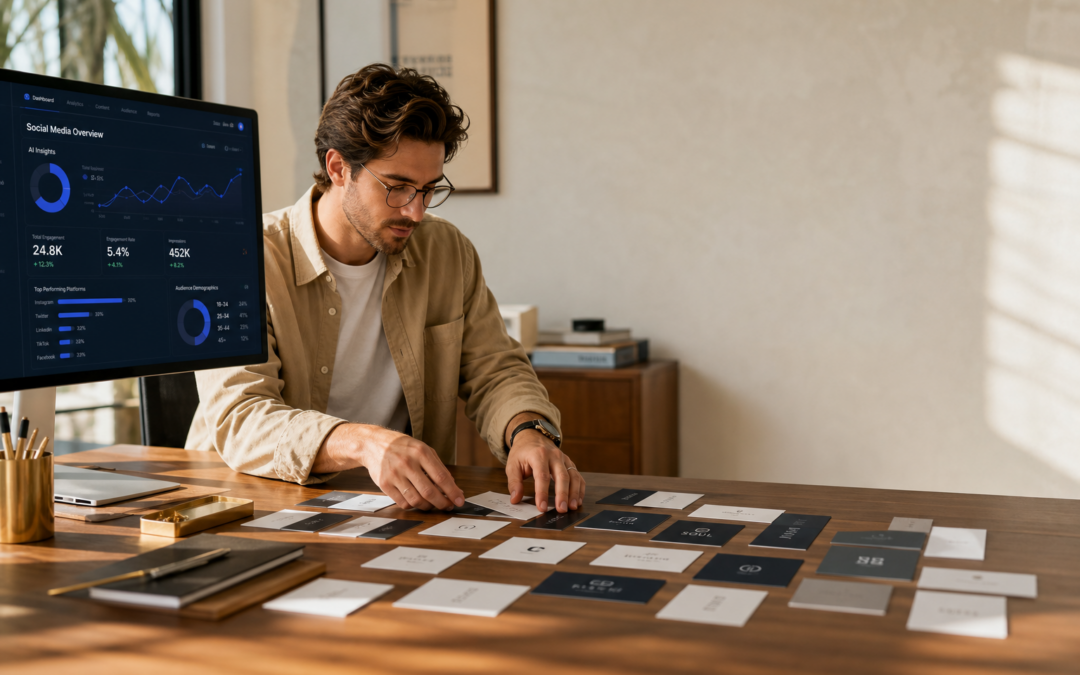
Los Angeles brands heading into 2026 face a new reality: business card design trends are less about looking “modern” or expensive, and more about building a brand that’s clearly rooted in LA’s visual culture while connecting smoothly across both physical and digital channels. Designs that stand out are those that feel tangible and local—using bold materials, adaptable visuals, and true digital links to turn quick introductions into lasting business relationships. In a city where first impressions matter, the right card or logo can be the difference between being remembered and being overlooked.
Key Takeaways
- Metal and metallic-infused business cards—using brushed steel, metal inlays, and shiny foils—are gaining traction for their staying power and signals of authenticity, especially in competitive California markets (Forbes Advisor).
- Design trends are shifting toward adaptable, locally inspired visuals, with custom typography and multicultural cues drawn from LA’s dynamic signage (see the LA28 Olympic branding via Creative Bloq).
- QR codes—designed in brand colors and sometimes embedding logos—are now key visual elements, creating a direct bridge from real-world interactions to measurable digital engagement (Cardify Blog).
- 2026’s most effective branding in Southern California combines adaptability, eco-conscious materials, and locally meaningful storytelling for both digital and print touchpoints.
- The R.O.A.R. Framework (Root in Local Context, Optimize for Tactility and Tech, Adapt with Flexible Variants, Review with Analytics) gives step-by-step guidance for creating brand assets that work in LA’s unique market.
Business Card Design Trends: What Actually Matters for LA in 2026
The need to stand out in Los Angeles is real, and in 2026, simply having a “modern” design isn’t enough. Relying on generic templates or national styles misses the heart of California business branding: here, visual identity is about showing you belong to this community. A logo and business card that could work just as well in Dallas or Denver will get lost in the shuffle.
Many believe “modern” means stripped-down or bland. In reality, LA’s business culture favors designs that echo the city’s vibrant energy—think neon gradients, textured surfaces, or bilingual signage. The LA28 Olympic Games logo is a prime example: its flexible ‘A’ character doesn’t just look interesting, it directly nods to LA’s creative spirit and diversity (Creative Bloq). The message: adaptability and local storytelling are must-haves for Southern California marketing in 2026.
If your brand materials could be dropped into any city and still “work,” they’re not working hard enough for you in LA. Adding location-specific details—through color, typeface, or layout—tells prospects and partners you’re invested in the local market, not just passing through.
What Sets 2026’s Business Card Design Trends Apart?
The biggest shift for Los Angeles and Southern California business cards in 2026 is the move to tactile, high-impact materials. According to Forbes Advisor, companies like VistaPrint are offering cards with brushed steel, metal inlays, and shiny foils to convey authenticity and staying power. These choices aren’t just about looks—they’re a practical response to a world where digital impressions often disappear quickly.
Equally important, QR codes are now core design features. No longer hidden on the back, 2026’s best cards put brand-colored QR codes (sometimes with logos embedded) front and center, connecting the physical card to an online hub or booking page (Cardify Blog). Imagine a Santa Monica wellness clinic printing a hand-lettered logo on recycled, textured paper, with a bilingual QR code that leads directly to an AI-powered booking system—blending local style with digital ease.
The function matters as much as the form: a metal card with a bold QR code acts as both a memorable handshake and an instant digital intro. For a detailed comparison of these features, check out The Complete Los Angeles Buyer’s Guide 2026.
How LA’s Local Visuals Are Shaping 2026 Logo Design
In LA, the look of local signage—strip mall neon, hand-painted murals, and multicultural storefronts—inspires a lot of today’s logo design. The LA28 Olympics branding uses four custom typefaces, all drawn from real LA signage styles, to capture the city’s unique visual character (Creative Bloq).
Many brands make the mistake of defaulting to generic sans-serif typefaces that don’t say anything about their roots. By contrast, a Long Beach med spa using a logo inspired by local mural scripts, or a West Hollywood realtor drawing on bold, sun-faded letters from LA’s boulevards, immediately signals local relevance. For more on how different industries can approach this, see Best Brand Identity & Logo Design for Financial Advisors 2026.
But being “local” isn’t enough—adaptability is key. The LA28 logo’s ever-changing ‘A’ adapts for different audiences and events. Likewise, your business logo should have variants for different uses (social media, foil cards, digital presentations), so your brand always fits the context.
Should You Go Metallic, Paper, or Digital-First? (A Practical Comparison)
Choosing between metal, premium paper, eco-conscious materials, or digital-first business cards isn’t just about cost—it’s about the message you send and what fits the Southern California market. Here’s a comparison of the main options for 2026:
| Card Type | First Impression | Best Use Case | Typical Trade-Offs |
|---|---|---|---|
| Metal/Metallic-Infused | Strong, memorable, signals status and durability | Premium services, tech, luxury, design-led firms | Higher cost, heavier, less eco-friendly, can feel out of place for some brands |
| Traditional Premium Paper | Classic, flexible, easy to customize with finishes like spot UV or embossing | Professional services, retail, B2B sales | Less likely to stand out, can be overlooked, requires standout graphics |
| Eco-Conscious Paper (Recycled, Plantable, FSC-Certified) | Earth-friendly, signals local and environmental values | Sustainable brands, wellness, green startups, SoCal businesses marketing to eco-minded clients | Limited finishes, sometimes lower durability, can cost more for specialty options |
| Digital-First (NFC/QR Focused) | Interactive, tech-forward, connects offline to online instantly | Startups, digital services, networkers who want instant data capture | Needs tech adoption, tactile aspect reduced, novelty can fade |
Often, blended approaches work best. For example, a brushed-metal card with a branded QR code can pair physical prestige with digital engagement—especially powerful when combined with tools for AI social media management or AI-powered content creation to automate follow-ups.
What Most People Get Wrong About Localizing Brand Identity
One of the biggest mistakes in California business branding is confusing “local flavor” with clichés. Adding a palm tree or LA skyline to your logo isn’t enough; true localization means using subtle cues—fonts, color pairings, or layout inspired by actual local visuals—that really connect with your audience.
The LA28 Olympic logo’s shape-shifting variants are a great example of avoiding stereotypes, using flexible forms to reflect LA’s multicultural personality without falling back on tired icons (Creative Bloq). For small businesses in LA or Orange County, this could mean using bilingual type, drawing on neighborhood murals, or echoing the textures of local architecture. For practical tips on balancing DIY and professional design, see Brand Identity & Logo Design vs DIY for Real Estate Agents.
For example, a Downtown LA tech startup with a plain minimalist logo might look “clean,” but it misses the energy of the city. Commissioning a mark inspired by hand-painted signage or weaving in a subtle nod to a local landmark can make your brand memorable.
Integrating AI and Digital Touchpoints into Print Branding
A logo or business card delivers the most value when it connects to ongoing digital interaction. The 2026 trend of making QR codes (in brand colors and sometimes with the logo inside) a core visual element makes the jump from print to digital seamless (Cardify Blog). This is more than a gimmick—it’s a way to measure engagement and keep leads moving.
Many marketers still treat print and digital as separate. The most forward-thinking California brands use AI-powered tools—like Zapier for automating workflows, HubSpot for CRM, or Google Analytics UTM tracking on QR code links—to track scans, automate follow-ups, and tailor content. Imagine handing out a business card at a Chamber of Commerce event, and the recipient who scans your card gets a personalized LinkedIn invite or a custom video within minutes.
The design principle: don’t just “stick on” a QR code—make it central, on-brand, accessible, and welcoming. This is why business card design trends in 2026 are about creating a real bridge, not a dead end.
The R.O.A.R. Framework: Step-by-Step for Southern California Branding
To break through in a crowded market, California businesses benefit from a clear method. The R.O.A.R. Framework offers a simple, stepwise approach to developing logo and business card designs that are distinctive, adaptable, and measurable for 2026 and beyond. Here’s how to put each step into practical action:
- Root in Local Context: Start with research in your own neighborhood: take photos of local signs, gather color swatches from murals, and snap pictures of typefaces on storefronts. For example, a Venice Beach retailer might collect shots of pastel signage and wave patterns, then use those as reference points in their design brief. A Boyle Heights clinic could use script styles from nearby murals to guide their logo’s typography. This ensures your brand looks and feels genuinely tied to your surroundings—not just a generic “California” vibe.
- Optimize for Tactility and Tech: Choose materials that leave a real impression—like metallics, thick recycled paper, or textured embossing. For digital features, use dynamic QR code generators (such as QRCode Monkey or Beaconstac) that let you add your brand colors and logo, so the code becomes a design element. For instance, a local coffee shop might print plantable seed cards with an on-brand QR code that links to their eco-initiatives page, blending tactile and digital experiences.
- Adapt with Flexible Variants: Build a logo system with multiple versions: horizontal for banners, stacked for stamps, monochrome for one-color applications, and animated for digital use. Use a brand asset manager (like Canva Brand Kit or Frontify) to keep these organized for easy use in print, web, and video. For example, a West Hollywood realtor could have a bold, sun-faded street-style logo for signage and a simplified version for social media icons.
- Review and Iterate with Analytics: Set up unique QR code tracking links (with UTM parameters) to track scans and engagement. Connect these to tools like HubSpot, Mailchimp, or Google Analytics to see what works—such as which card variants or colorways get more scans. Use this feedback to improve your next print run or campaign. Treat each new card as a chance to test and learn, not just a fixed cost.
This framework helps make your branding both visually distinctive and designed for flexibility, measurement, and real-world business impact. For a more detailed look at workflows and budgeting, see Brand Identity & Logo Design Costs in 2026: Real Pricing and The Complete Los Angeles Buyer’s Guide 2026.
Real-World Scenarios: How LA Businesses Are Applying These Trends
Here are three scenarios showing how LA businesses put these trends into action:
- Culver City Film Production Studio: Uses a brushed-steel business card with a custom QR code linking to their showreel. The card’s weight makes an impression in meetings, while the QR code offers measurable engagement and instant portfolio access.
- Santa Monica Wellness Clinic: Uses a gradient-rich, hand-lettered logo inspired by local murals. Their cards, printed on textured recycled paper, feature a bilingual QR code that leads to an AI-powered booking page—showing both local roots and digital savvy.
- Downtown LA Tech Startup: Chooses digital-first NFC cards that trigger personalized video intros based on the event where the card is scanned. Their logo adapts to each event’s branding, showing both technological fluency and design flexibility.
The takeaway: LA brands that show up physically in a memorable way, while linking directly to their digital presence, are the ones people remember and recommend.
Logo & Business Card Design Ideas That Actually Drive Results in Southern California
Flash alone doesn’t drive results—local relevance and memorability do. The most effective LA business card designs in 2026 blend tactile novelty (like metallic cards), local storytelling (custom graphics or type), and digital interaction (scannable QR codes). For instance, a Costa Mesa HVAC shop might see a meaningful bump in estimates requested after moving from plain cards to metallic ones with a QR code linking to a seasonal offer—connecting the card directly to a business goal.
It’s worth noting: standout design isn’t always the most expensive. Many local businesses budget in the low-to-mid four figures monthly for branding and print, though actual costs vary widely depending on market and print choices. Prioritizing memorable materials and useful features can help stretch your investment. For more on maximizing ROI for specific industries, see Print Marketing & Flyer Design: 2026 Guide for Orange County Med Spas.
Don’t overlook the value of matching print and digital: a business card that mirrors your website’s design and links to an AI-powered live chat assistant (see AI Live Chat & Lead Intake Assistant) can create a smooth experience, turning a handshake into a real conversation.
Common Pitfalls: Why Some 2026 Designs Fail to Connect
Chasing trends just to keep up can backfire. Too many LA marketers design cards that look flashy but skip adding a QR code, or use fonts that are hard to read. Logos that ignore local context or practical needs end up forgettable.
Another common pitfall is brand inconsistency: handing out a premium metal card while your website or social media look outdated or off-brand. In 2026, customers expect a unified brand story—every contact point, from your card to your Instagram, should match visually and in tone. Inconsistency chips away at trust and recognition. For a list of costly design mistakes and how to avoid them, see 7 Logo Design Mistakes Costing Cosmetic Clinics Leads.
The solution isn’t to spend more—it’s to make sure every detail fits your business and speaks to Southern California’s unique market.
Final Word: Relevance Outranks Every Trend
At the end of the day, the top business card design trends Los Angeles brands should care about in 2026 aren’t about the fanciest materials or newest tech. The brands that win are those whose cards and logos are unmistakably part of this community—combining memorable materials, adaptable visuals, and digital bridges that turn first meetings into real business.
Keep your focus on flexible assets, clear and memorable design, and seamless connections between print and digital. And if you need expert guidance, Lion Click Media has experience helping California businesses navigate these choices—always with an eye on what works best in the local market.
Frequently Asked Questions
What logo styles are most effective for California startups in 2026?
California startups succeed with bold minimalist logos that use geometric shapes and adaptable designs, ensuring clarity across digital and physical platforms.
How can QR codes on business cards improve networking?
QR codes link offline encounters to online content, allowing instant access to portfolios or AI chatbots, which boosts follow-up engagement and brand recall.
Is it worth investing in AI social media management for small businesses?
Yes, AI social media management automates posting and engagement using your brand assets, saving time while building consistent authority and audience growth.
What are the best materials for business cards in Southern California’s eco-conscious market?
Sustainable stocks with textured finishes resonate well, reflecting environmental values and standing out in networking events common in Southern California.
How do adaptive logos help with statewide branding in California?
Adaptive logos allow subtle modifications to suit different local markets without losing core brand identity, enhancing relevance across California’s diverse audiences.
Can I use AI tools to design my logo and business cards?
AI tools can assist with design concepts, but combining AI with expert human creativity ensures originality, strategic adaptability, and cross-platform readiness.
What’s the risk of using too many tech features on business cards?
Overloading cards with features like multiple QR codes or AR without strong digital follow-up can confuse prospects and dilute your brand message.
Get Your Free AI Marketing Audit
See exactly where you are leaving leads on the table and how Lion Click Media can help you rank higher, capture more customers, and Make Your Brand ROAR. No cost, no obligation.
Claim My Free Audit →Or chat with our 24/7 AI assistant (bottom-right) for instant answers.